What Are the Most Common Symptoms of Low Testosterone and How Is It Diagnosed?

Low testosterone, clinically termed hypogonadism, is a medical condition characterized by insufficient testosterone production by the testicles, resulting in serum testosterone levels below the normal reference range for adult men (typically below 300 ng/dL as of 2025). This androgen deficiency affects approximately 2-6 million American men, according to the American Urological Association (2018), yet remains underdiagnosed due to symptom overlap with other conditions and normal aging processes.
Understanding the common symptoms of low testosterone in men and the diagnostic criteria is essential for timely medical intervention. Testosterone deficiency impacts multiple physiological systems, from sexual health and reproductive health to metabolic syndrome risk and bone density maintenance. According to the Endocrine Society Clinical Practice Guidelines (2018), proper diagnosis requires both clinical symptoms and biochemical confirmation through multiple testosterone blood tests performed under standardized conditions.
Key Characteristics of Testosterone Deficiency
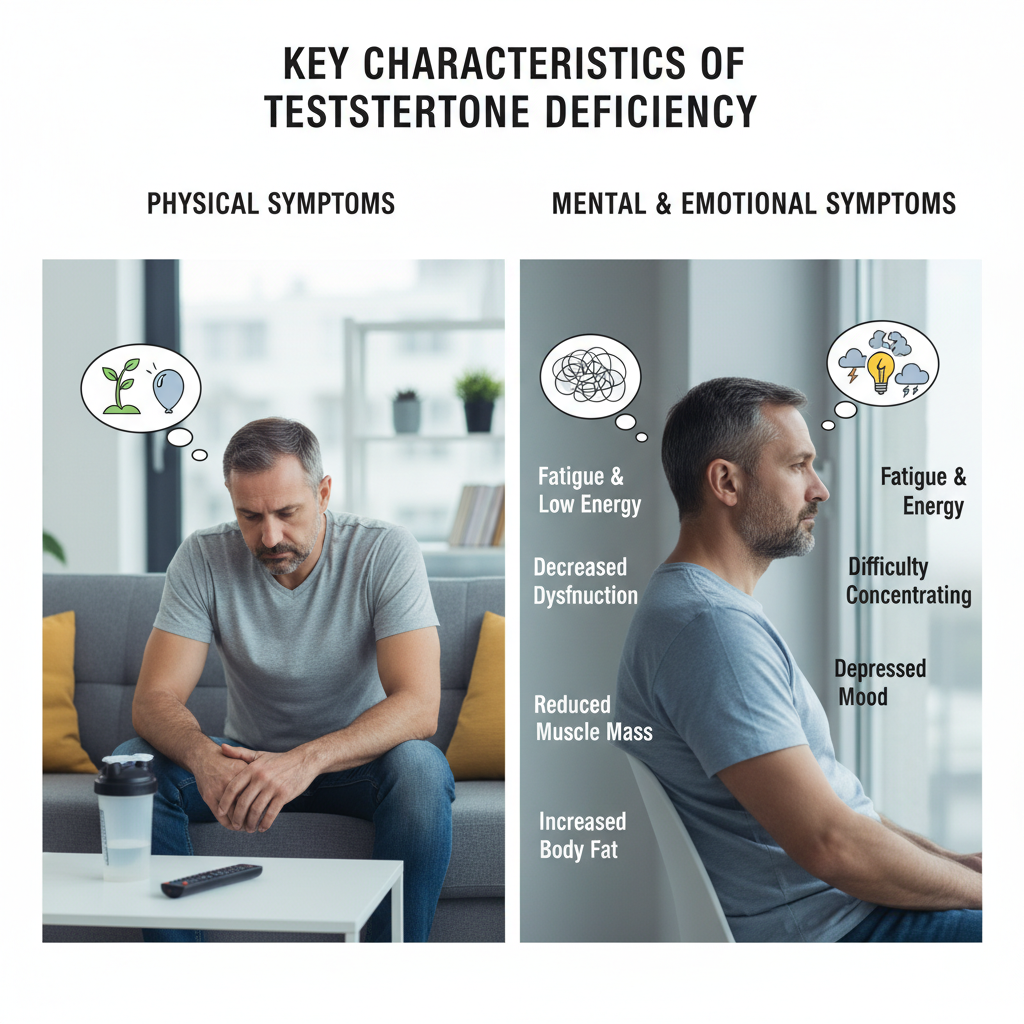
Hypogonadism manifests in two distinct forms that determine both symptom presentation and treatment approaches. Primary hypogonadism originates from testicular problems, where Leydig cells fail to produce adequate testosterone despite normal signals from the pituitary gland and hypothalamus. Klinefelter syndrome represents the most common genetic cause of primary hypogonadism, affecting approximately 1 in 500 to 1 in 1,000 males.
Secondary hypogonadism results from dysfunction in the hypothalamus or pituitary gland, which fail to produce sufficient luteinizing hormone or follicle-stimulating hormone to stimulate testosterone production. This form, also called central hypogonadism, accounts for approximately 30-40% of all hypogonadism cases according to research published in The Journal of Clinical Endocrinology & Metabolism (2020).
Late-onset hypogonadism, sometimes called andropause or male menopause, represents age-related testosterone decline affecting men over 40. Testosterone levels naturally decrease by approximately 1-2% annually after age 30, but symptomatic testosterone deficiency requiring treatment occurs in only 20-30% of men over 60 years old.
Physical Symptoms of Low Testosterone

The physical symptoms of testosterone deficiency affect multiple body systems, creating a distinct clinical presentation that distinguishes pathological hypogonadism from normal aging.
Sexual Dysfunction and Reproductive Health
Decreased libido represents the most common sexual symptom, reported by 60-70% of men with confirmed hypogonadism according to studies in The Aging Male journal (2019). Unlike temporary low sex drive from stress or relationship issues, testosterone-related libido reduction persists across situations and worsens progressively. Erectile dysfunction accompanies low testosterone in approximately 50% of cases, though erectile problems alone do not indicate testosterone deficiency since vascular and neurological factors more commonly cause this condition.
Reduced testicular size and decreased fertility issues emerge in severe or longstanding cases. Testosterone plays critical roles in spermatogenesis, and men with total testosterone below 200 ng/dL often experience low sperm production affecting fertility. Infertility issues from testosterone deficiency typically reverse with appropriate testosterone replacement therapy or alternative interventions targeting the underlying cause.
Body Composition and Muscle Mass Changes
Loss of muscle mass and reduced physical performance occur because testosterone stimulates protein synthesis and muscle fiber growth. Research in The American Journal of Medicine (2021) demonstrated that men with testosterone below 250 ng/dL experienced 3-5% annual muscle mass reduction compared to age-matched controls. This muscle loss and weakness manifests as decreased endurance, reduced stamina, and diminished physical strength even with consistent exercise.
Increased body fat, particularly visceral adipose tissue accumulation, accompanies testosterone deficiency. Men with low T show 20-30% higher rates of obesity compared to those with normal testosterone range, creating a bidirectional relationship where obesity further suppresses testosterone production through increased aromatase activity converting testosterone to estradiol.
Bone Density and Skeletal Health
Decreased bone mass represents a serious but often overlooked consequence. Testosterone maintains bone mineral density through direct effects on osteoblasts and indirect effects via conversion to estradiol. Men with chronic testosterone deficiency face 2-3 times higher fracture risk according to Osteoporosis International (2020). Bone density loss accelerates when total testosterone remains below 200 ng/dL for extended periods.
Secondary Physical Manifestations
Additional physical symptoms include reduced facial hair and body hair loss, breast tissue development (gynecomastia), hot flashes similar to female menopause, and changes in red blood cell production. Some men experience decreased hemoglobin and hematocrit, while others develop mild erythrocytosis. Testicular atrophy may occur, particularly in primary hypogonadism affecting Leydig cell function.
Emotional Symptoms and Cognitive Effects
The emotional symptoms associated with low testosterone significantly impact quality of life and often drive men to seek medical evaluation.
Mood Disorders and Depression
Depression affects 40-50% of men with biochemically confirmed hypogonadism, according to research in Psychoneuroendocrinology (2020), representing rates 2-3 times higher than age-matched controls. The connection between low testosterone and depression involves complex neurobiological mechanisms, including testosterone’s effects on serotonin and dopamine systems. Unlike primary depression, mood disorders from testosterone deficiency often improve with hormone optimization.
Irritability, anxiety, and reduced motivation accompany depressive symptoms. Men describe feeling emotionally flat, losing interest in previously enjoyed activities, and experiencing decreased confidence. These symptoms of borderline low testosterone may occur even when total testosterone falls within the lower normal range (300-350 ng/dL).
Cognitive Impairment and Mental Function
Poor concentration, brain fog, and memory problems represent common cognitive symptoms. Studies in The Journal of Clinical Endocrinology & Metabolism (2019) found men with testosterone below 300 ng/dL scored 10-15% lower on cognitive assessments measuring working memory and processing speed. Difficulty focusing at work, trouble retaining new information, and slowed decision-making frequently prompt medical evaluation.
Fatigue and Energy Levels
Chronic fatigue and persistent tiredness affect 70-80% of men with symptomatic low testosterone. Unlike normal tiredness that resolves with rest, testosterone-related fatigue persists despite adequate sleep. This lack of energy manifests as reduced vitality, decreased morning energy, and diminished exercise recovery. Sleep disturbances, including sleep apnea, frequently coexist with and exacerbate testosterone deficiency, creating a complex clinical picture requiring comprehensive evaluation.
How Low Testosterone Is Diagnosed
Accurate diagnosis requires integrating clinical symptoms assessment with standardized hormonal testing procedures following established protocols.
Initial Medical Evaluation
The diagnostic process begins with comprehensive medical history and physical examination. According to the American Association of Clinical Endocrinologists (2020), doctors assess symptom duration, severity, and progression while evaluating risk factors including obesity, type 2 diabetes, chronic opioid use, and pituitary disorders. Physical examination includes assessment of testicular size, body hair distribution, muscle mass, and fat distribution patterns. A digital rectal exam evaluates prostate health before initiating any treatment.
Testosterone Blood Test Protocols
Diagnosis requires at least two separate serum testosterone tests performed between 7 AM and 10 AM on different days, according to Endocrine Society guidelines (2018). Morning testing is essential because testosterone levels peak in early morning and decline throughout the day by 20-30%. Men should fast for 8-12 hours before testing, as food intake can affect hormone levels and sex hormone binding globulin concentrations.
The standard testosterone screening includes measurement of total testosterone using liquid chromatography-mass spectrometry, the most accurate testosterone measurement method as of 2025. Older radioimmunoassay techniques showed 10-20% variability, leading major medical organizations to recommend mass spectrometry-based testing for definitive diagnosis. Venipuncture draws blood for lab tests analyzing multiple hormone markers.
Comprehensive Hormone Panel Components
A complete hormonal evaluation extends beyond total T levels to include:
- Free testosterone: Measures unbound, biologically active testosterone, with normal ranges 50-210 pg/mL for adult men
- Bioavailable testosterone: Includes free testosterone plus albumin-bound testosterone, representing hormone available for cellular uptake
- Sex hormone binding globulin (SHBG): Protein binding 60-70% of circulating testosterone, with high SHBG causing symptoms despite normal total testosterone
- Luteinizing hormone (LH) and follicle-stimulating hormone (FSH): Distinguish primary from secondary hypogonadism based on elevation (primary) or normal/low levels (secondary)
- Prolactin: Elevated levels suppress testosterone production and indicate possible pituitary tumors
- Estradiol: Monitors testosterone-to-estrogen conversion
- Thyroid hormones: Rule out thyroid dysfunction mimicking low testosterone symptoms
Additional baseline testing includes hemoglobin, hematocrit, prostate-specific antigen (PSA), lipid panel, and glucose or hemoglobin A1c to assess metabolic syndrome and type 2 diabetes risk.
Diagnostic Criteria and Reference Ranges
Clinical hypogonadism diagnosis requires total testosterone below 300 ng/dL on two separate morning tests plus relevant clinical symptoms. Symptomatic low testosterone between 300-400 ng/dL represents a gray zone where treatment decisions depend on free testosterone, bioavailable testosterone, SHBG levels, and symptom severity. The importance of SHBG in testosterone testing cannot be overstated—men with high SHBG may show normal total testosterone but low free testosterone, explaining persistent symptoms.
Testosterone reference ranges by age guide interpretation:
| Age Group | Normal Total Testosterone (ng/dL) | Optimal Testosterone Range |
|---|---|---|
| 20-29 years | 400-1,000 | 600-800 |
| 30-39 years | 350-900 | 500-750 |
| 40-49 years | 300-850 | 450-700 |
| 50-59 years | 250-800 | 400-650 |
| 60+ years | 200-750 | 350-600 |
These ranges represent population averages; individual optimal levels vary. Some men remain asymptomatic at 350 ng/dL while others experience significant symptoms at 450 ng/dL.
Common Misconceptions About Low Testosterone
Myth: All men experience significant testosterone decline requiring treatment as they age.
Reality: While testosterone decreases approximately 1-2% annually after age 30, only 20-30% of men over 60 develop symptomatic hypogonadism requiring intervention. Normal age-related testosterone decline differs from pathological deficiency.
Myth: A single testosterone test definitively diagnoses low testosterone.
Reality: How many tests are needed to diagnose low testosterone? At least two separate morning tests are required because testosterone levels fluctuate 20-30% daily, and stress, illness, or poor sleep can temporarily suppress production.
Myth: Symptoms alone confirm testosterone deficiency.
Reality: Fatigue, depression, and erectile dysfunction occur in numerous conditions including thyroid disorders, sleep apnea, depression, and vascular disease. Biochemical confirmation prevents misdiagnosis and inappropriate treatment.
Myth: Normal total testosterone means you cannot have symptoms.
Reality: Men can experience symptoms with normal testosterone levels if free testosterone or bioavailable testosterone are low due to elevated SHBG. Comprehensive hormone analysis reveals these cases.
Low Testosterone vs. Normal Age-Related Decline
Normal age-related testosterone decline occurs gradually at 1-2% annually, remains asymptomatic in most men, and results in total testosterone staying above 300 ng/dL through the 60s. Men with normal aging maintain adequate free testosterone, preserved libido, stable muscle mass with appropriate exercise, and normal bone density through their 70s.
Pathological testosterone deficiency presents differently. Signs of testosterone deficiency in older men include rapid symptom onset over 6-12 months, multiple concurrent symptoms affecting sexual, physical, and cognitive domains, total testosterone below 300 ng/dL, and progressive worsening despite lifestyle modifications. What are the early warning signs of low testosterone? Sudden libido changes, unexplained fatigue despite adequate sleep, rapid muscle loss with maintained activity, and mood changes disproportionate to life circumstances suggest evaluation by an endocrinologist.
When to Seek Medical Evaluation
When should men get tested for low testosterone? Medical evaluation is warranted when experiencing multiple persistent symptoms lasting over three months, particularly combinations of sexual dysfunction, unexplained fatigue, and body composition changes. Men under 50 with any symptoms deserve earlier evaluation given the atypical nature of testosterone deficiency in younger populations.
Specific populations requiring proactive screening include men with type 2 diabetes (30-50% prevalence of hypogonadism), obesity (BMI >30), metabolic syndrome, chronic opioid therapy, pituitary disorders, or testicular injury. Additionally, symptoms of low testosterone in men under 30 always warrant investigation given the abnormality of significant deficiency in this age group.
For comprehensive evaluation and treatment of male hormone levels, consulting specialists at Mens Health Solutions ensures evidence-based assessment following current clinical guidelines.
Practical Applications and Next Steps
After confirming diagnosis, treatment options include testosterone replacement therapy via testosterone injections, testosterone gel, testosterone patches, or subcutaneous pellets. The standard protocol for diagnosing low testosterone guides monitoring with follow-up testing every 3-6 months initially, then annually once stable therapeutic levels are achieved. How often should testosterone levels be checked? During treatment, testing occurs 4-6 weeks after initiation for injections and 2-4 weeks for gels to ensure appropriate dosing.
Hormone monitoring includes not only testosterone levels but also hematocrit (every 6-12 months), PSA (annually for men over 40), and estradiol to detect excessive aromatization. Complete list of low testosterone symptoms guides treatment response assessment, with most men experiencing improvement in energy levels within 3-4 weeks, libido changes within 6-12 weeks, and body composition changes over 6-12 months.
Alternative approaches include addressing underlying causes—treating sleep apnea, optimizing metabolic health, reducing obesity, or adjusting medications that suppress testosterone production. Young men with secondary hypogonadism may benefit from therapies preserving fertility rather than testosterone replacement, which suppresses spermatogenesis.
Understanding how to recognize testosterone deficiency symptoms, the importance of proper diagnostic testing, and available treatment pathways empowers men to seek timely medical intervention and optimize hormonal health throughout their lifespan.