Doctor and patient discussing TRT health insurance coverage and testosterone replacement therapy costs

Is Testosterone Replacement Therapy Worth It? Cost, Benefits & Verdict

Yes, insurance typically covers Testosterone Replacement Therapy (TRT) when a patient has documented Low Testosterone (Low T) or Hypogonadism confirmed by lab testing. Coverage depends on your specific health insurance policy TRT terms, the diagnosis codes submitted, and whether your insurer requires Prior Authorization. Without medical necessity documentation, most plans deny claims. What You Get: Coverage…

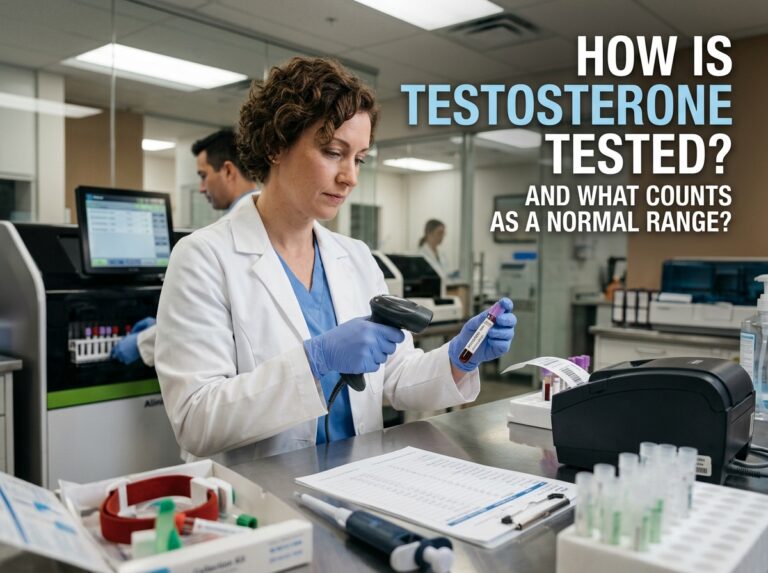
Doctor reviewing a lab blood test chart showing normal hormone ranges and testosterone levels.

How to Get Your Testosterone Tested: 7-Step Guide

Outcome: Follow this guide to accurately test your testosterone levels and receive interpretable lab results within 1-2 weeks. Skill level: Beginner. Time required: 15-30 minutes for the blood draw, plus 2-5 business days for results. Testosterone is the primary male sex hormone that regulates muscle mass, libido, bone density, and mood. A blood test measuring serum testosterone is the only reliable way to diagnose testosterone…

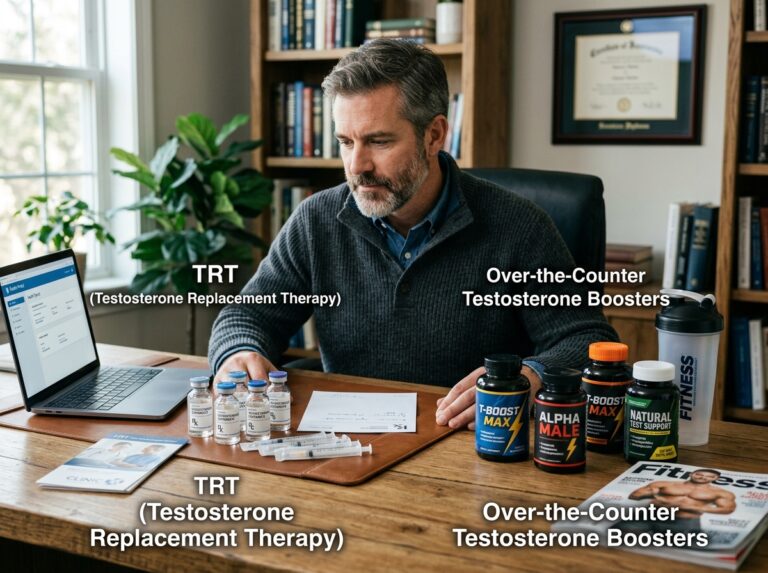
Prescription TRT vial next to OTC testosterone booster supplement pills for hormone therapy comparison.

What Is TRT? Understanding the Difference Between Testosterone Replacement Therapy and Over-the-Counter Boosters

TRT (Testosterone Replacement Therapy) is a prescription-based hormone therapy that restores testosterone levels using clinically dosed medication under medical supervision. Over-the-counter (OTC) testosterone boosters are dietary supplements sold without a prescription that claim to stimulate the body’s natural testosterone production. The core difference lies in regulation, dosage precision, and clinical oversight. Why This Distinction Matters Low…

Professional illustration of Can You Stop TRT Once You Start, and What Happens If You Do?

Can You Stop TRT Once You Start? What Happens When You Discontinue Testosterone Therapy

Testosterone Replacement Therapy (TRT) discontinuation is the medically supervised process of stopping exogenous testosterone administration to allow the Hypothalamic-Pituitary-Testicular Axis (HPTA) to resume endogenous hormone production. While it is possible to stop TRT after starting, the cessation process triggers significant physiological changes including temporary hormone deficiency, withdrawal symptoms, and requires structured protocols for optimal recovery (according…

Professional illustration of What Are the Signs of Low Testosterone in Men Over 40?

What Are the Signs of Low Testosterone in Men Over 40? Understanding Androgen Deficiency Symptoms

Low testosterone, clinically termed hypogonadism or androgen deficiency, is a condition where the testes produce insufficient testosterone to maintain normal physiological functions in men. According to the American Urological Association (as of 2025), testosterone levels below 300 nanograms per deciliter (ng/dL) combined with clinical symptoms indicate hypogonadism requiring evaluation. Men over 40 experience natural testosterone…

Professional illustration of How Long Does It Take to Feel the Effects of TRT?

How to Feel the Effects of TRT: Complete Timeline Guide

Testosterone Replacement Therapy (TRT) typically produces noticeable effects within 4-12 weeks, with full therapeutic benefits manifesting over 6-12 months (FDA, 2023). Most patients report initial symptom improvement at 3-6 weeks, depending on the testosterone administration method and individual hormone metabolism. This guide outlines the week-by-week TRT timeline to help you understand when to expect specific…

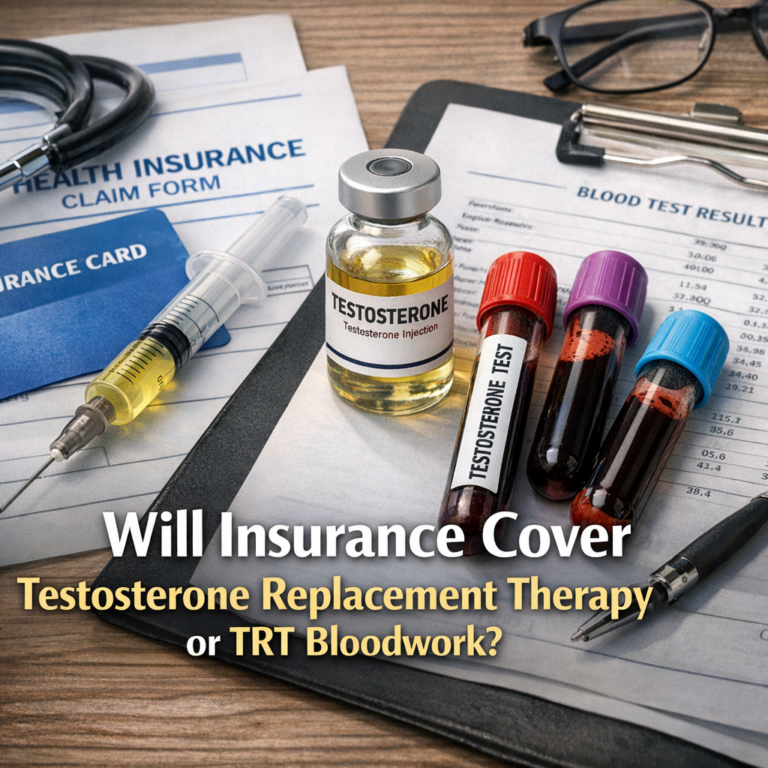
will-insurance-cover-testosterone-replacement-therapy-or-trt-bloodwork-2026

What Is Insurance Coverage for Testosterone Replacement Therapy? Understanding TRT and Bloodwork Benefits

Insurance coverage for testosterone replacement therapy (TRT) is a health insurance benefit that pays for medically necessary treatment of clinically diagnosed low testosterone (hypogonadism) and associated diagnostic testing when specific clinical criteria are met. Most health insurance plans, including Medicare, Medicaid, and private insurance, will cover TRT and bloodwork when a healthcare provider documents medical…

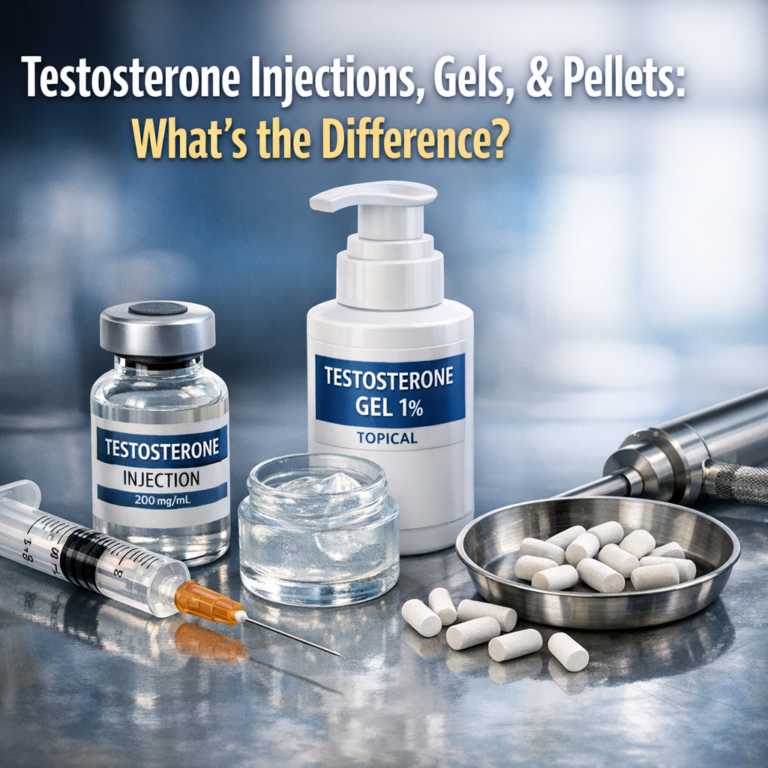
Professional illustration of What's the Difference Between Testosterone Injections, Gels, and Pellets?

What’s the Difference Between Testosterone Injections, Gels, and Pellets? A Complete TRT Delivery Methods Comparison

Testosterone replacement therapy (TRT) is a medical treatment that restores testosterone serum levels in men with hypogonadism or androgen deficiency through three primary delivery methods: intramuscular injections, transdermal gels, and subcutaneous pellets. Each testosterone administration route offers distinct advantages in hormone level optimization, treatment compliance, and patient preference. According to the FDA (Food and Drug…

does-trt-affect-fertility-and-can-you-preserve-it-while-on-therapy-2026

Does TRT Affect Fertility and Can You Preserve It While on Therapy?

Testosterone Replacement Therapy (TRT) significantly suppresses sperm production in 90% of men within 6 months, according to reproductive endocrinology research (Journal of Clinical Endocrinology & Metabolism, 2023). The exogenous testosterone disrupts the Hypothalamic-Pituitary-Gonadal Axis, reducing Luteinizing Hormone (LH) and Follicle Stimulating Hormone (FSH) to near-zero levels. Whereas standard TRT protocols typically cause azoospermia or severe oligospermia,…

Testosterone therapy consultation explained

How Does Testosterone Replacement Therapy (TRT) Work?

Testosterone Replacement Therapy (TRT) is a medical treatment that supplements or replaces testosterone in men diagnosed with hypogonadism or clinically low testosterone levels. According to the FDA, TRT involves administering exogenous testosterone through various delivery methods to restore serum testosterone to normal physiological ranges (typically 300-1000 ng/dL as of 2025). Why Testosterone Replacement Therapy Matters…