Is Testosterone Replacement Therapy Worth It? Cost, Benefits & Verdict

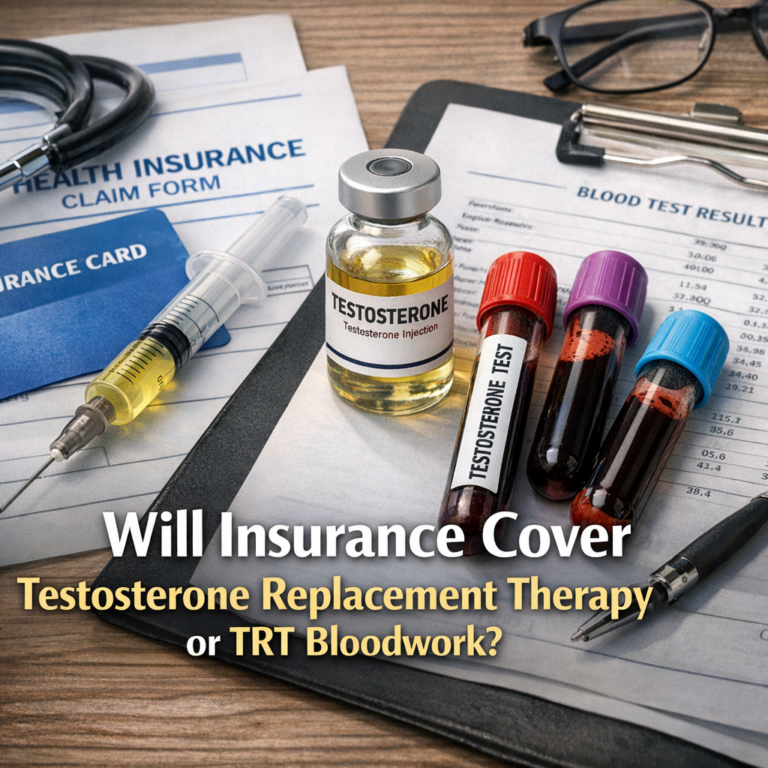
Yes, insurance typically covers Testosterone Replacement Therapy (TRT) when a patient has documented Low Testosterone (Low T) or Hypogonadism confirmed by lab testing. Coverage depends on your specific health insurance policy TRT terms, the diagnosis codes submitted, and whether your insurer requires Prior Authorization. Without medical necessity documentation, most plans deny claims.
What You Get: Coverage Inclusions vs. Extras
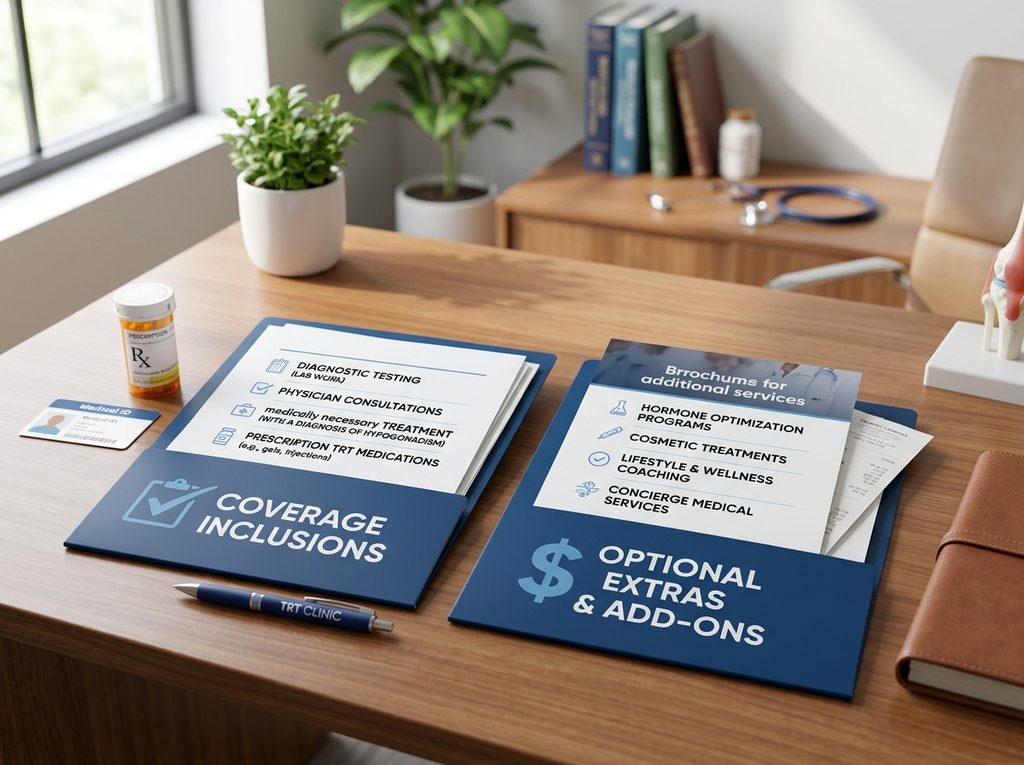
Health insurance policy TRT coverage varies by plan type—HMO, PPO, Medicare, or Medicaid—but most follow similar patterns.
Typically Covered
- Blood tests confirming testosterone deficiency diagnosis (usually two morning readings below 300 ng/dL)
- Endocrinologist or Urologist consultation visits
- Testosterone Injections (most commonly covered form)
- Testosterone Gel (brand and generic, subject to formulary tier)
- Follow-up labs to monitor hormone levels and red blood cell count
Often Excluded or Requires Extra Payment
- Testosterone Pellets (frequently considered non-preferred, higher out-of-pocket costs)
- Compounded testosterone formulations not FDA-approved
- Concierge or subscription-based TRT clinics that bill outside insurance networks
- Direct-pay TRT providers without in-network provider ties
According to Cigna’s 2024 clinical policy bulletin, testosterone therapy claim approval requires two confirmed low testosterone readings plus symptom documentation—a standard shared by Aetna and UnitedHealthcare.
Cost Breakdown: TRT With and Without Insurance
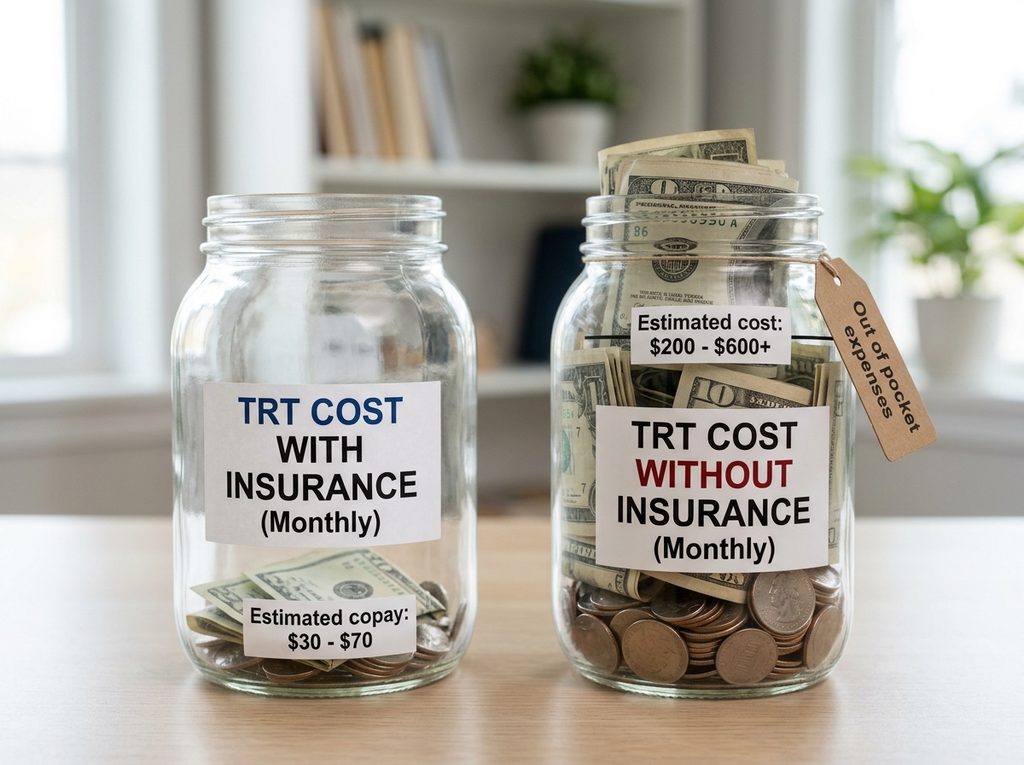
The average cost of testosterone therapy with insurance is significantly lower than paying out-of-pocket, but exact TRT out-of-pocket expenses depend on your Deductible, Copay, and Coinsurance structure.
Insured Costs
- Copay for testosterone injections: $10–$40 per month after deductible
- Testosterone gel copay: $20–$60 per month (brand-name tiers cost more)
- Specialist visit copay (Endocrinologist/Urologist): $25–$75 per visit
- Annual deductible impact: $500–$2,000 before coverage kicks in, per 2024 Kaiser Family Foundation data
How much does testosterone therapy cost without insurance?
- Testosterone injections: $40–$100 per month
- Testosterone gel: $200–$500 per month for brand names
- Testosterone pellets: $500–$700 per insertion (every 3–6 months)
- Initial lab work and consultation: $150–$400
Does Medicare Cover Testosterone Replacement Therapy?
Medicare covers TRT under Part B and Part D when Hypogonadism is documented as medically necessary. Medicare Advantage plans may add Prior Authorization requirements. Is testosterone replacement therapy covered under Medicaid? Yes, in most states, but coverage details and preferred drug lists vary by state Medicaid program.
Which Insurance Companies Cover TRT Treatment?
Major national insurers with established TRT insurance coverage policies include:
- Blue Cross Blue Shield: Covers TRT with documented lab results; prior authorization required in most states
- UnitedHealthcare: Requires medical necessity testosterone therapy documentation and step therapy in some plans
- Aetna: Clinical policy mandates two low testosterone readings plus symptoms
- Cigna: Covers FDA-approved formulations; pellets often excluded
Since the Affordable Care Act (ACA) requires coverage of medically necessary treatments, insurance denial testosterone therapy claims are usually tied to insufficient documentation—not blanket exclusions.
Expected Benefits & ROI Analysis
For men with confirmed Hypogonadism, TRT can improve energy, libido, muscle mass, and mood within 3–6 months, according to a 2023 Journal of Clinical Endocrinology study. When insurance covers the majority of costs, the return on investment is high: symptom relief for a monthly copay of $10–$60 versus untreated Low Testosterone’s impact on quality of life.
Without coverage, ROI decreases sharply. Paying $200–$700 monthly out-of-pocket for symptom management requires higher confidence in diagnosis accuracy and long-term commitment.
Who Should Pursue Insurance-Covered TRT
- Men with lab-confirmed testosterone deficiency diagnosis (below 300 ng/dL on two tests)
- Patients experiencing documented symptoms: fatigue, low libido, muscle loss, mood changes
- Individuals willing to complete the testosterone therapy prior authorization process
- Patients using in-network Endocrinologist or Urologist providers
Who Shouldn’t Rely on Insurance-Covered TRT
- Men seeking testosterone for bodybuilding or anti-aging without a clinical diagnosis
- Patients unwilling to undergo required blood testing and monitoring
- Individuals wanting testosterone pellets, which many plans limit or exclude
- Those using out-of-network, insurance-free TRT programs
How to Get Insurance to Cover Testosterone Therapy
- Get two morning blood tests confirming Low Testosterone levels
- Document symptoms with your primary care physician or specialist
- Request referral to an in-network Endocrinologist or Urologist
- Submit required testosterone therapy billing codes (ICD-10: E29.1 for testicular hypofunction)
- Complete Prior Authorization paperwork if required by your plan
How to Appeal Insurance Denial for Testosterone Therapy
If your insurance coverage for TRT is denied, request a written explanation, gather additional lab evidence, and file a formal appeal within your insurer’s deadline—typically 60–180 days. Resources like does insurance cover TRT can help clarify coverage criteria and appeal strategies specific to your plan.
Alternatives to Consider
- Cash-pay TRT clinics: Often $100–$300/month flat rate, bypassing insurance coverage criteria for TRT entirely
- GoodRx and discount programs: Can reduce testosterone gel or injection costs by 20–50%
- Compounding pharmacies: Lower-cost custom formulations, though not FDA-approved and rarely reimbursed
- TRT clinics accepting insurance: Hybrid model combining lower costs with clinical oversight
Final Verdict: Is TRT Worth It With Insurance?
TRT is worth pursuing through insurance if you have a confirmed testosterone deficiency diagnosis and access to in-network specialists. The combination of low copays, monitored dosing, and FDA-approved formulations makes insurance-covered TRT more cost-effective and safer than self-directed alternatives. Men without a clinical diagnosis or those seeking non-covered options like pellets should budget for higher out-of-pocket expenses.