What Is TRT? Understanding the Difference Between Testosterone Replacement Therapy and Over-the-Counter Boosters
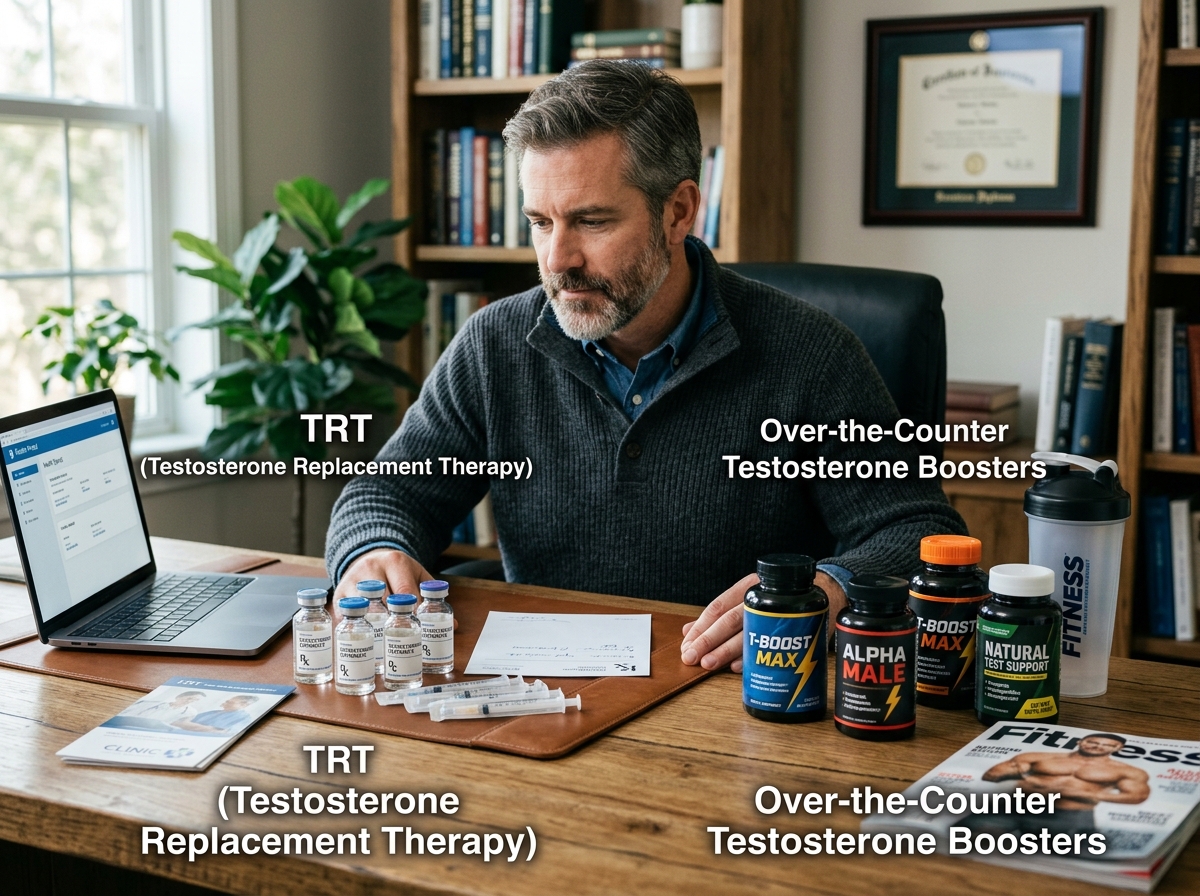
TRT (Testosterone Replacement Therapy) is a prescription-based hormone therapy that restores testosterone levels using clinically dosed medication under medical supervision. Over-the-counter (OTC) testosterone boosters are dietary supplements sold without a prescription that claim to stimulate the body’s natural testosterone production. The core difference lies in regulation, dosage precision, and clinical oversight.
Why This Distinction Matters
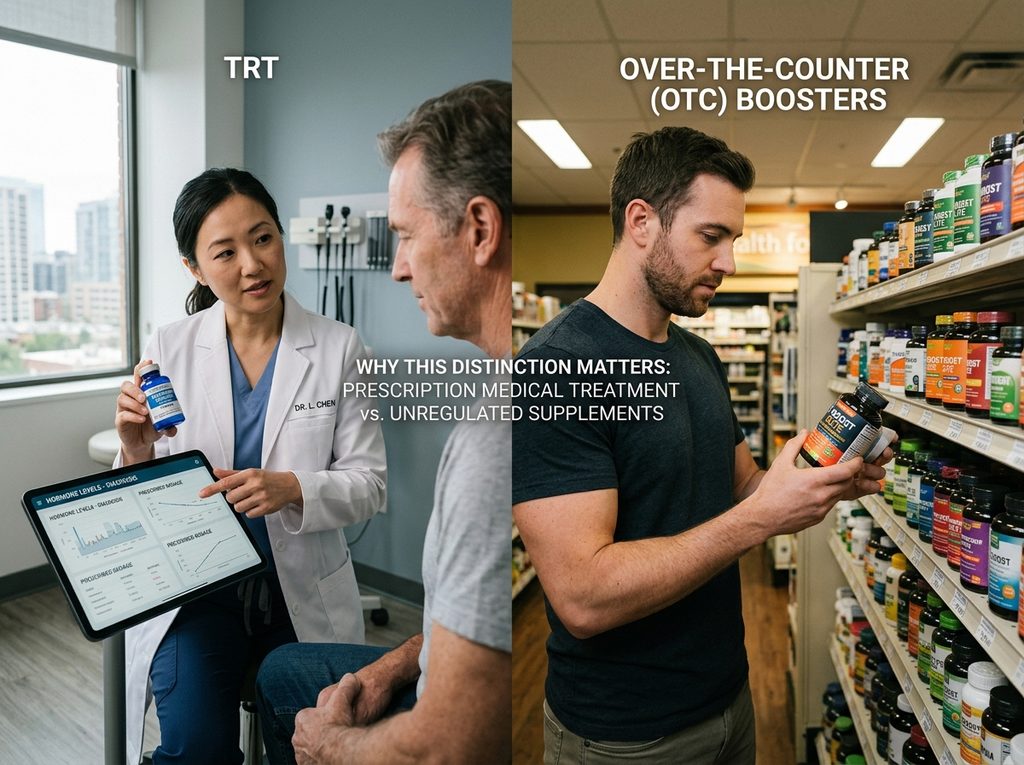
Low testosterone, or Low T, affects an estimated 2 million men in the United States, according to the Urology Care Foundation (2023). Confusing prescription therapy with supplements can delay proper treatment for hypogonadism—a medical condition marked by abnormally low testosterone production. Understanding whether you need hormone replacement therapy or a natural testosterone booster depends on lab-confirmed testosterone deficiency symptoms, not marketing claims.
Key Characteristics of TRT vs OTC Testosterone Boosters
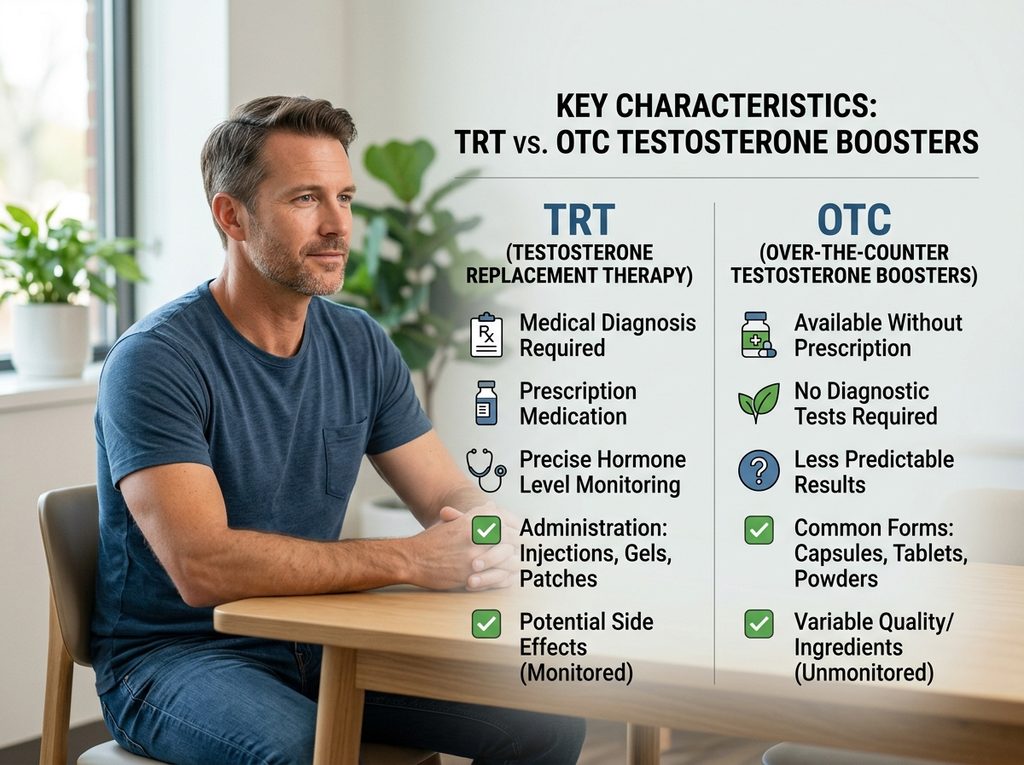
- Regulation: TRT medications like testosterone cypionate and testosterone gel are FDA-approved prescription drugs. OTC boosters fall under dietary supplement regulations, which require no pre-market FDA approval for efficacy.
- Diagnosis requirement: TRT requires a documented blood test confirming total testosterone below 300 ng/dL, per American Urological Association (2023) guidelines. Boosters require no diagnosis.
- Delivery methods: TRT includes testosterone injections, testosterone gel, testosterone cream, and testosterone pellets. Boosters come as oral capsules or powders sold at retailers like GNC.
- Active ingredients: TRT delivers bioidentical or synthetic testosterone directly. Boosters contain herbal testosterone support ingredients like ashwagandha, D-aspartic acid, tribulus terrestris, fenugreek, zinc, and vitamin D.
- Clinical evidence: TRT is validated through decades of clinical trials. Most OTC boosters lack large-scale, peer-reviewed clinical trials supporting testosterone-boosting claims.
How Each Treatment Works
How TRT Works: Step-by-Step Process
- A patient visits an endocrinologist, urologist, or hormone therapy clinic reporting testosterone deficiency symptoms such as fatigue, low libido, or erectile dysfunction.
- A hormone panel testing session measures free testosterone and total testosterone levels via blood draw.
- If levels confirm hypogonadism, the provider prescribes testosterone cypionate, testosterone gel, or pellets.
- Dosage is calibrated and monitored through follow-up blood tests every 3–6 months.
- Providers may add aromatase inhibitors or estrogen blockers to manage estrogen conversion side effects.
How OTC Testosterone Boosters Work
T-booster supplements theoretically support the body’s existing hormone pathways using vitamins and herbal compounds. For example, zinc and vitamin D are linked to healthy endocrine function, while ashwagandha has shown modest testosterone increases in small studies. However, these supplements do not introduce exogenous testosterone and cannot correct clinically diagnosed androgen deficiency.
Common Misconceptions
Myth: Testosterone boosters work the same as TRT, just slower.
Reality: Boosters do not deliver testosterone; they only support natural production, which is ineffective for men with true hypogonadism.
Myth: TRT is a form of anabolic steroids comparison and equally risky.
Reality: TRT restores testosterone to normal physiological range under medical supervision, unlike anabolic steroids, which push levels far above baseline.
Myth: Over-the-counter supplements are always safe because they’re natural.
Reality: OTC supplement safety varies widely; testosterone supplements side effects can include liver strain and interactions with medications.
Myth: You can self-diagnose Low T and start TRT without a prescription.
Reality: TRT requires prescription testosterone therapy authorized by a licensed provider after blood test confirmation.
Myth: All testosterone boosters produce the same results.
Reality: Testosterone booster effectiveness varies by ingredient quality, dosage, and individual physiology.
TRT vs OTC Testosterone Boosters: Side-by-Side Comparison
| Factor | TRT (Prescription) | OTC Testosterone Boosters |
|---|---|---|
| Regulatory status | FDA-approved prescription medication | Unregulated dietary supplements |
| Diagnosis needed | Blood test-confirmed hypogonadism | None required |
| Delivery form | Injections, gel, cream, pellets | Oral capsules, powders |
| Onset of effects | 2–6 weeks for measurable changes | Variable; often weeks with modest results |
| Average cost | $150–$500/month at a TRT clinic near me | $20–$60/month |
| Clinical oversight | Endocrinologist or urologist-managed | Self-administered |
Practical Applications: Which Option Fits Your Situation?
Men with lab-confirmed Low T, persistent erectile dysfunction, or diagnosed hypogonadism typically require prescription testosterone therapy rather than supplements. Those with borderline testosterone levels seeking mild libido enhancement or muscle mass building support may consider natural test boosters as a first step. For a detailed breakdown of TRT vs testosterone boosters, including cost comparisons and effectiveness data, consulting a men’s health clinic is recommended before starting either option.
As of 2025, more urologists recommend starting with a comprehensive hormone panel before choosing between clinical grade testosterone therapy and OTC alternatives. This ensures treatment matches the underlying cause—whether it’s true androgen deficiency or age-related decline that may respond to lifestyle and supplement changes.
Conclusion
TRT and OTC testosterone boosters serve different purposes: TRT treats diagnosed hormone replacement therapy needs, while boosters offer supplementary, unregulated support. The right choice depends on blood test results, symptom severity, and guidance from a qualified endocrinologist or urologist.