will-insurance-cover-testosterone-replacement-therapy-or-trt-bloodwork-2026

What Is Insurance Coverage for Testosterone Replacement Therapy? Understanding TRT and Bloodwork Benefits

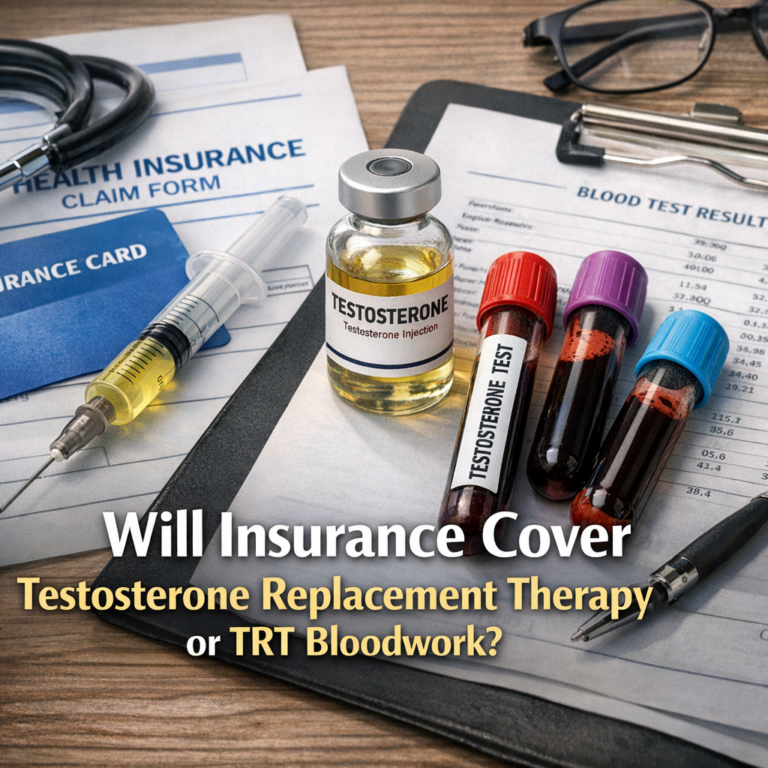
Insurance coverage for testosterone replacement therapy (TRT) is a health insurance benefit that pays for medically necessary treatment of clinically diagnosed low testosterone (hypogonadism) and associated diagnostic testing when specific clinical criteria are met. Most health insurance plans, including Medicare, Medicaid, and private insurance, will cover TRT and bloodwork when a healthcare provider documents medical…

Professional illustration of What's the Difference Between Testosterone Injections, Gels, and Pellets?

What’s the Difference Between Testosterone Injections, Gels, and Pellets? A Complete TRT Delivery Methods Comparison

Testosterone replacement therapy (TRT) is a medical treatment that restores testosterone serum levels in men with hypogonadism or androgen deficiency through three primary delivery methods: intramuscular injections, transdermal gels, and subcutaneous pellets. Each testosterone administration route offers distinct advantages in hormone level optimization, treatment compliance, and patient preference. According to the FDA (Food and Drug…

does-trt-affect-fertility-and-can-you-preserve-it-while-on-therapy-2026

Does TRT Affect Fertility and Can You Preserve It While on Therapy? 2025

Testosterone Replacement Therapy (TRT) significantly suppresses sperm production in 90% of men within 6 months, according to reproductive endocrinology research (Journal of Clinical Endocrinology & Metabolism, 2023). The exogenous testosterone disrupts the Hypothalamic-Pituitary-Gonadal Axis, reducing Luteinizing Hormone (LH) and Follicle Stimulating Hormone (FSH) to near-zero levels. Whereas standard TRT protocols typically cause azoospermia or severe oligospermia,…

Treatment options for ED explained

What Treatments Are Available for ED?

Erectile dysfunction (ED) treatments encompass a range of medical, mechanical, and lifestyle interventions designed to restore erectile function and improve male sexual health. These treatment options for men address the inability to achieve or maintain erection sufficient for sexual intercourse. As of 2025, the FDA has approved multiple therapeutic approaches ranging from oral medications to…

Testosterone therapy consultation explained

How Does Testosterone Replacement Therapy (TRT) Work?

Testosterone Replacement Therapy (TRT) is a medical treatment that supplements or replaces testosterone in men diagnosed with hypogonadism or clinically low testosterone levels. According to the FDA, TRT involves administering exogenous testosterone through various delivery methods to restore serum testosterone to normal physiological ranges (typically 300-1000 ng/dL as of 2025). Why Testosterone Replacement Therapy Matters…

Signs of low testosterone in men

What Are the Signs of Low Testosterone in Men?

Low testosterone in men, medically termed hypogonadism or testosterone deficiency syndrome, is a condition where the testicles produce insufficient amounts of the male hormone testosterone, resulting in serum testosterone levels below 300 nanograms per deciliter (ng/dL) as of 2025 clinical standards. This hormonal imbalance affects approximately 20% of men over 60 and 40% of men…

Bloodwork schedule for TRT monitoring

How to Monitor Bloodwork on TRT: Complete Testing Schedule Guide

Regular laboratory tests are essential for safe and effective testosterone replacement therapy. According to clinical guidelines updated in 2024, TRT patients require bloodwork every 3-6 months during the first year, then every 6-12 months for maintenance monitoring. This comprehensive guide provides a step-by-step protocol for testosterone monitoring, hormone level testing, and TRT blood test frequency…

Testosterone therapy side effects explained

Are Testosterone Replacement Therapy Side Effects Reversible? Evidence-Based Analysis

Most testosterone replacement therapy side effects are reversible within 3-12 months after discontinuation, including testicular atrophy, suppressed sperm production, and gynecomastia. According to the American Urological Association (2022), 70-85% of men experience full recovery of natural testosterone production within 6-24 months of stopping TRT. However, some effects like male pattern baldness and certain cardiovascular changes…

Low testosterone symptoms in men over 40

What Are the Signs of Low Testosterone in Men Over 40 — And When Should You Get Tested?

Low testosterone affects approximately 40% of men over 40, causing symptoms ranging from decreased energy levels to erectile dysfunction. You should get testosterone levels checked if you experience two or more persistent symptoms, including reduced libido, chronic fatigue, muscle weakness, or depressive symptoms lasting more than three months. The best time to get testosterone tested…

Online TRT: Evaluating telehealth hormone clinics for safe, legitimate testosterone replacement therapy.

Is Online TRT Safe and Legitimate? Cost, Benefits & Verdict

Online testosterone replacement therapy (TRT) can be safe and legitimate when provided by licensed telehealth hormone clinics that follow DEA regulations, require comprehensive blood tests, and maintain proper medical oversight—but approximately 30-40% of virtual men’s health platforms operate in regulatory gray areas, according to 2024 data from the Federation of State Medical Boards. The legitimacy…