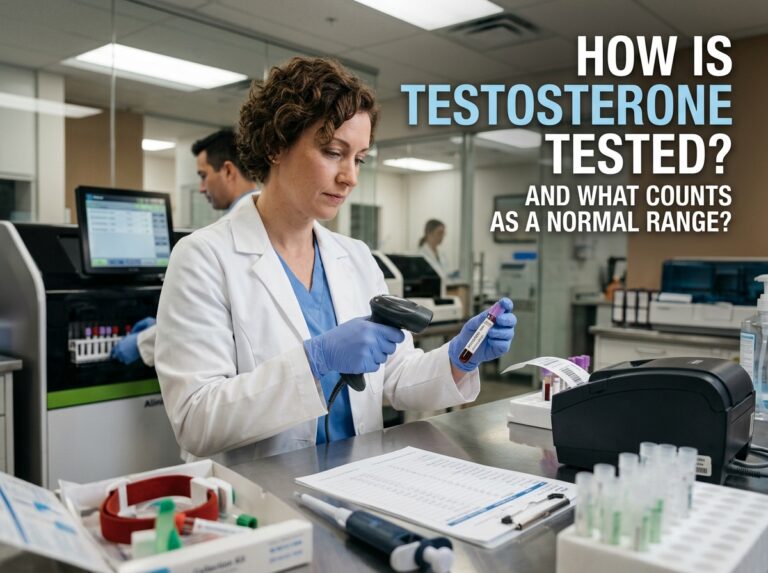
What Is Insurance Coverage for Testosterone Replacement Therapy? Understanding TRT and Bloodwork Benefits

Insurance coverage for testosterone replacement therapy (TRT) is a health insurance benefit that pays for medically necessary treatment of clinically diagnosed low testosterone (hypogonadism) and associated diagnostic testing when specific clinical criteria are met. Most health insurance plans, including Medicare, Medicaid, and private insurance, will cover TRT and bloodwork when a healthcare provider documents medical necessity through laboratory tests showing serum testosterone levels below 300 ng/dL and the presence of clinical symptoms (as of 2025).
Understanding Health Insurance Coverage for Testosterone Replacement Therapy

Health insurance coverage for hormone therapy involves multiple components that determine whether treatment will be covered medical expenses. Insurance companies evaluate TRT coverage requests based on coverage criteria established by medical review boards and clinical guidelines. The FDA regulates testosterone medications, but insurance policy terms vary significantly by carrier and plan type.
Medical necessity represents the primary factor in coverage determination. According to insurance standards implemented in 2024, insurers require documentation of both low hormone levels (total testosterone below 300 ng/dL measured on two separate occasions) and clinical symptoms such as fatigue, reduced libido, or erectile dysfunction. A primary care physician, endocrinologist, or urologist must establish this diagnosis through comprehensive diagnostic testing before insurance approval testosterone therapy can proceed.
Key Characteristics of TRT Insurance Coverage
- Prior Authorization Requirements: Most insurance plans require prior authorization before covering testosterone injections, testosterone gel, testosterone patches, or testosterone pellets, with approval typically taking 3-7 business days
- Formulary Restrictions: Insurance formularies list covered medications by tier, with generic medication (testosterone cypionate, testosterone enanthate) typically in lower tiers than brand name medication (Androgel, Testim, Axiron, Fortesta, Vogelxo)
- Ongoing Documentation: Coverage guidelines require regular follow-up lab coverage to monitor hormone levels, typically every 3-6 months for maintenance testosterone therapy
- Provider Network Requirements: Insurance benefits verification often requires using in-network TRT provider services to minimize patient responsibility and out-of-pocket costs
- Age and Gender Requirements: Most policies include age restrictions and gender requirements, with coverage typically limited to adult males diagnosed with male hypogonadism
How Insurance Coverage Works for TRT Treatment
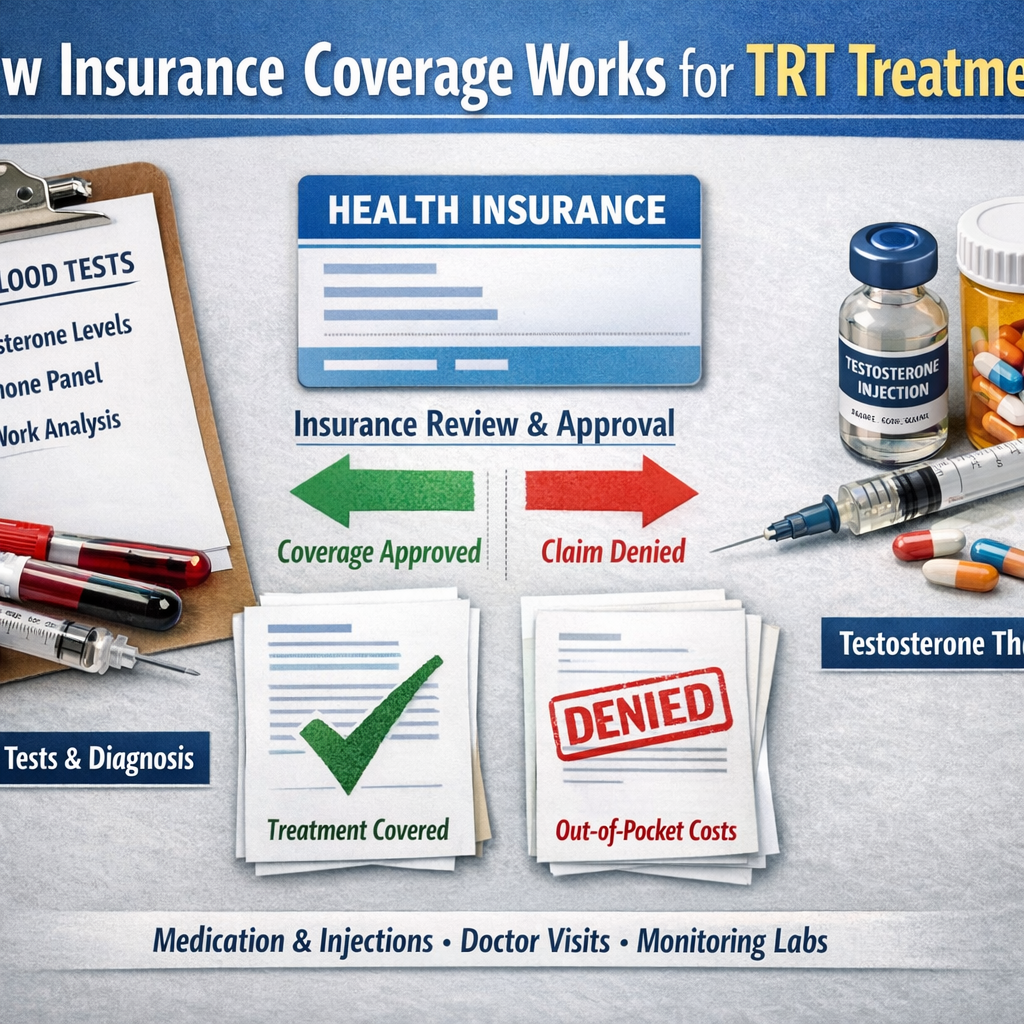
The process of obtaining insurance coverage determination for testosterone replacement coverage follows a structured medical claim submission pathway. Understanding these steps helps patients navigate insurance authorization requirements effectively.
- Initial Consultation and Testing: A healthcare provider orders hormone level testing including total testosterone, free testosterone, and serum testosterone measurements; most insurance plans cover these diagnostic tests as covered services with standard copay or deductible application
- Diagnosis Documentation: The provider documents covered diagnosis using appropriate medical coding (ICD-10 code E29.1 for testicular hypogonadism), establishing therapeutic treatment necessity
- Treatment Authorization: The provider submits treatment authorization requests to the insurance company, including clinical criteria documentation and proposed prescription coverage for specific testosterone formulations
- Formulary Review: The insurer evaluates the request against their drug formulary tier structure, potentially requiring step therapy (trying generic options before brand name) or addressing quantity limits
- Approval and Cost Sharing: Upon approval, patients pay their portion through copay, deductible, or coinsurance arrangements based on their insurance plan benefits
Blood Test Coverage and Laboratory Testing Insurance
Insurance bloodwork coverage for TRT involves both initial diagnostic test coverage and ongoing monitoring requirements. Lab work insurance typically covers hormone panel insurance tests when ordered by a qualified healthcare provider for medically necessary treatment evaluation.
Initial testosterone blood test coverage includes comprehensive panels measuring total testosterone, free testosterone, SHBG blood test, and related markers. According to healthcare reimbursement data from 2024, these panels cost between $50-$200 without insurance, but covered medical expenses reduce patient costs to standard lab test insurance copays of $10-$50.
TRT monitoring coverage requires periodic bloodwork to assess treatment effectiveness and safety. Insurance companies typically cover PSA test coverage (prostate monitoring), CBC coverage testosterone (blood count monitoring), liver panel insurance, and metabolic panel coverage every 3-6 months. These follow-up lab coverage requirements ensure safe hormone therapy management and represent preventive care under most insurance policy terms.
Insurance Coverage by Plan Type
Medicare Coverage for TRT
Medicare covers testosterone replacement therapy under Part B (medical treatment costs) when medically necessary. Does Medicare cover testosterone replacement therapy? Yes, Medicare Part D provides prescription drug coverage for testosterone medications when prescribed by a Medicare-approved provider. Medicare reimbursement rates typically cover 80% of approved costs after deductible, with beneficiaries responsible for the remaining 20%.
Medicaid Coverage for TRT
Will Medicaid pay for TRT bloodwork? Medicaid coverage varies by state but generally covers testosterone therapy cost and associated laboratory tests when medical necessity is documented. State Medicaid programs may have more restrictive coverage limitations or require additional peer review before approval.
Private Insurance Coverage
Private insurance plans, including employer insurance, PPO insurance, and HMO coverage, typically include testosterone coverage criteria in their covered services. Does private insurance cover testosterone injections? Most plans do, though formulary testosterone options and medication tier placement significantly impact patient out of pocket cost for TRT bloodwork and medications.
Common Misconceptions About TRT Insurance Coverage
Myth: Insurance automatically covers all testosterone medications equally.
Reality: Drug formulary tier placement varies; compounded testosterone coverage is often excluded, while generic options receive preferential coverage over brand vs generic testosterone products.
Myth: Any low testosterone reading guarantees coverage approval.
Reality: How low must testosterone be for insurance coverage? Most insurers require levels below 300 ng/dL on two separate tests plus documented clinical symptoms; will insurance pay for testosterone if levels are borderline? Typically not without additional clinical justification.
Myth: Age determines automatic TRT coverage eligibility.
Reality: Does insurance cover TRT for men over 40? Coverage depends on documented medical necessity regardless of age, though will insurance deny testosterone for age considerations may apply to younger patients without clear hypogonadism diagnosis.
Prescription Coverage vs. Diagnostic Testing Coverage
Understanding the distinction between prescription medication benefits and diagnostic test coverage is essential. Prescription coverage for testosterone falls under pharmacy benefits, subject to refill restrictions, quantity limits, and medication tier copayments. Patients may access medications through retail, mail order testosterone, or specialty pharmacy TRT services depending on their insurance network and provider contract.
Diagnostic testing, including initial hormone level testing cost and ongoing TRT monitoring coverage, falls under medical benefits with separate deductible and copay structures. Unlike TRT medication coverage with predetermined copays, diagnostic test coverage may require meeting annual deductibles before insurance payment begins. If you’re wondering does insurance cover TRT, understanding both components is crucial for estimating total healthcare expenses.
Practical Steps for Obtaining Insurance Coverage
How to get insurance to pay for testosterone therapy requires systematic documentation and communication with your healthcare provider and insurer.
- Verify Benefits: Contact your insurer for insurance benefits verification to understand your specific coverage guidelines, insurance standards, and documentation requirements
- Choose Qualified Providers: Select an endocrinologist visit for testosterone, specialist referral TRT, or urologist visit for TRT be covered within your insurance network to maximize covered services
- Document Thoroughly: Ensure your provider documents both laboratory evidence (comprehensive hormone panel results) and clinical symptoms in medical records
- Submit Complete Authorization: How to get prior authorization for TRT involves submitting all required clinical criteria documentation with initial requests to avoid delays
- Appeal if Denied: If you experience insurance denial testosterone, understand how to appeal insurance denial for testosterone therapy by requesting peer review and submitting additional medical evidence
- Consider Alternatives: If certain formulations face insurance exclusions, discuss generic alternatives or different delivery methods (injections vs. gels) with comparable treatment authorization prospects
For patients experiencing related conditions, exploring comprehensive treatment options remains important. Learn more about What Treatments Are Available for ED to understand connections between hormone optimization and overall men’s health.
Insurance coverage for testosterone replacement therapy and bloodwork depends on meeting documented medical necessity criteria across both diagnostic and treatment phases. By understanding coverage criteria, documentation requirements, and the distinction between prescription and laboratory coverage, patients can successfully navigate the insurance approval process for medically necessary hormone therapy.