How to Monitor Bloodwork on TRT: Complete Testing Schedule Guide
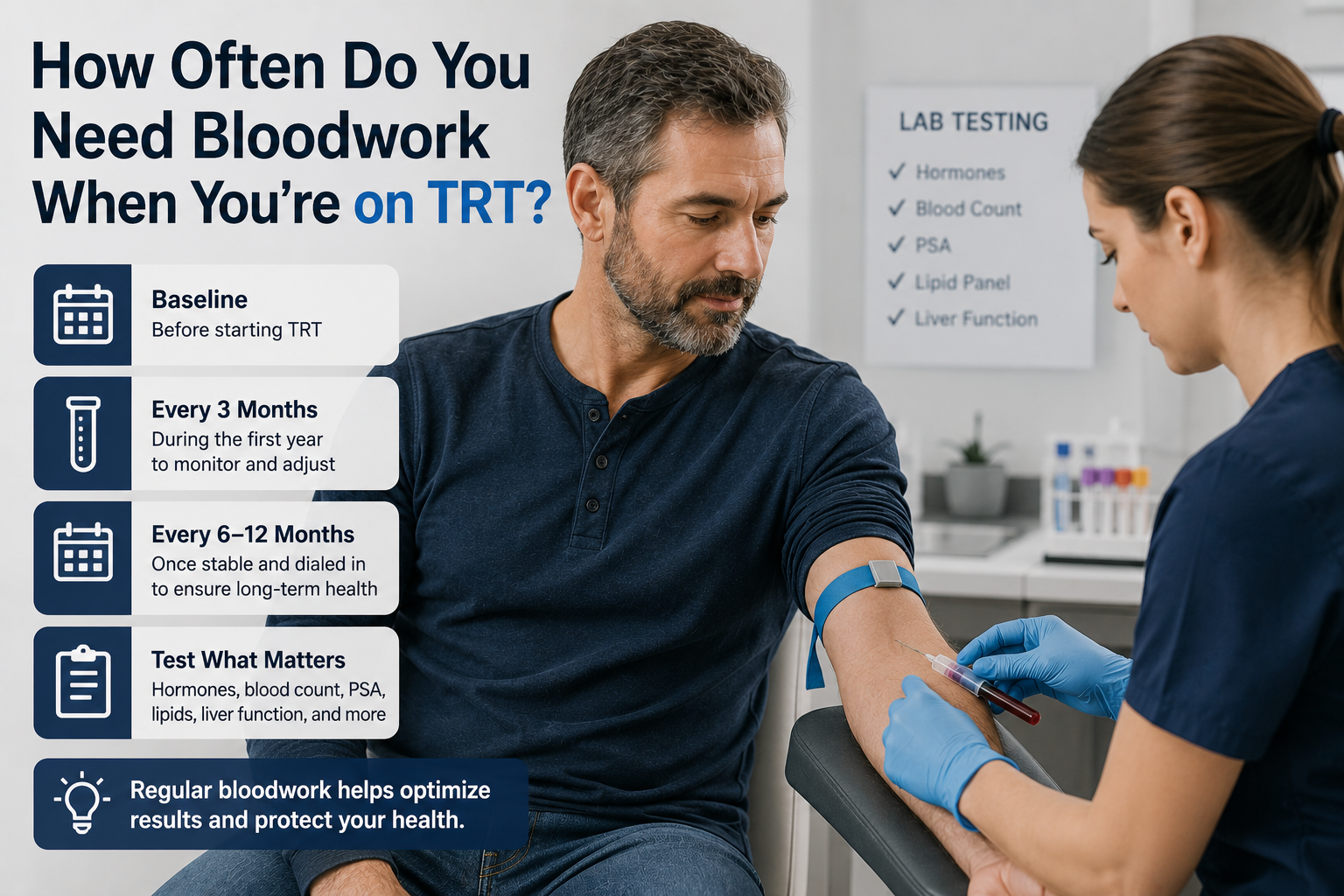
Regular laboratory tests are essential for safe and effective testosterone replacement therapy. According to clinical guidelines updated in 2024, TRT patients require bloodwork every 3-6 months during the first year, then every 6-12 months for maintenance monitoring. This comprehensive guide provides a step-by-step protocol for testosterone monitoring, hormone level testing, and TRT blood test frequency throughout your treatment journey.
Timeframe: Initial setup takes 1-2 weeks; ongoing monitoring requires 30-60 minutes every 3-6 months
Difficulty Level: Beginner-friendly with physician guidance
Expected Outcome: Optimized testosterone levels while minimizing cardiovascular health risks and side effects
Before You Begin: Prerequisites

- Establish care with an endocrinologist, urologist, or hormone specialist experienced in male hormone therapy
- Complete baseline blood work before starting testosterone treatment (essential for comparison)
- Verify insurance coverage for periodic blood tests and laboratory monitoring
- Schedule appointments 8-12 weeks in advance to maintain consistent testing intervals
- Fast 8-12 hours before blood draws for accurate lipid panel and glucose results
- Schedule blood draws between 7-10 AM when testosterone levels peak naturally
Step 1: Complete Initial Baseline Testing (Before Starting TRT)
Baseline blood work establishes your starting hormone panel and identifies pre-existing conditions. Your primary care physician or hormone specialist must order a comprehensive metabolic panel before initiating androgen therapy.
Required Baseline Tests:
- Total testosterone and free testosterone: Confirms hypogonadism diagnosis (typically below 300 ng/dL)
- Estradiol: Measures baseline estrogen levels (normal range: 10-40 pg/mL in men)
- Complete blood count (CBC): Evaluates hemoglobin, hematocrit, and red blood cell count
- Prostate specific antigen (PSA): Screens for prostate health (normal: below 4.0 ng/mL)
- Liver function tests: Measures ALT and AST liver enzymes
- Lipid panel: Assesses cholesterol, HDL, LDL, and triglycerides
- Sex hormone binding globulin (SHBG): Determines testosterone bioavailability
- Luteinizing hormone (LH) and follicle stimulating hormone (FSH): Evaluates pituitary function
- Thyroid panel (TSH): Rules out thyroid-related hormone issues
- HbA1c and glucose: Screens for diabetes risk
Action Item: Request copies of all baseline results for your records. These values serve as your reference point throughout testosterone therapy monitoring.
Step 2: First Follow-Up Labs (6-8 Weeks After Starting TRT)
The first follow-up testing occurs 6-8 weeks after initiating testosterone treatment. This critical checkpoint reveals how your body responds to the initial dose and identifies early side effects requiring intervention.
What to Test:
- Total testosterone and free testosterone: Verify levels reach therapeutic range (600-1000 ng/dL)
- Estradiol: Monitor for excessive aromatization (target: 20-30 pg/mL)
- Complete blood count: Check for early polycythemia (hematocrit should stay below 54%)
Your endocrinologist uses these results to adjust your testosterone dose. According to FDA guidance, most patients require dosage modifications during this initial phase.
Step 3: Three-Month Blood Work Monitoring
Three month blood work represents your first comprehensive health screening on testosterone replacement therapy. This testing protocol includes all baseline markers plus additional cardiovascular monitoring.
Required Three-Month Panel:
- Full hormone panel (testosterone levels, estradiol, SHBG, DHT if symptoms warrant)
- Complete blood count for red blood cell monitoring
- Comprehensive metabolic panel (CMP) including kidney function and creatinine
- Liver function tests (ALT, AST, bilirubin)
- Lipid monitoring TRT (cholesterol trends may shift)
- Prostate monitoring via PSA testing frequency
Action Item: Track your blood marker tracking results in a spreadsheet or health app. Consistent patient monitoring reveals patterns your physician uses for TRT optimization.
Step 4: Six-Month Labs and Initial Review
Six month labs mark the transition from initial stabilization to maintenance monitoring. Most patients achieve stable testosterone level monitoring by this point.
Six-Month Testing Requirements:
- Comprehensive hormone replacement monitoring panel
- Hematocrit monitoring (critical for polycythemia screening)
- PSA testing (biannual testing minimum for men over 40)
- Metabolic monitoring including HbA1c
- Blood pressure monitoring and cardiovascular risk assessment
- Vitamin D testing (deficiency common in TRT patients)
At this checkpoint, your hormone specialist evaluates whether you need quarterly labs or can extend to biannual TRT testing based on stability and risk factors.
Step 5: Establish Ongoing Surveillance Schedule
Long-term monitoring frequency depends on age, health status, and how well you maintain stable levels. The testing protocol typically follows these clinical monitoring guidelines:
Maintenance Labs TRT Schedule:
| Patient Profile | Lab Frequency | Key Tests |
|---|---|---|
| Men under 40, stable levels | Every 6 months | Testosterone, estradiol, CBC, CMP |
| Men 40-60, no complications | Every 3-6 months | Full hormone panel, CBC, PSA, lipids |
| Men over 60 or with cardiovascular risk | Every 3 months | Comprehensive panel, cardiac markers |
| Elevated hematocrit (>52%) | Monthly until stable | CBC, blood pressure |
Most physicians recommend quarterly blood work for the first year, transitioning to biannual testing once you achieve consistent testosterone optimization.
Essential Blood Tests: What Each Marker Reveals

Hormone Level Optimization Markers:
- Total Testosterone: Target range 600-1000 ng/dL for symptom relief
- Free Testosterone: Should represent 2-3% of total testosterone
- Estradiol: Optimal 20-30 pg/mL (too low causes joint pain; too high causes water retention)
- SHBG: Low levels may require dose adjustments
- DHT (Dihydrotestosterone): Only test if experiencing hair loss or prostate symptoms
Safety Labs and Health Screening:
- Hematocrit/Hemoglobin: Elevated red blood cell count increases stroke risk (phlebotomy required above 54%)
- PSA (Prostate Specific Antigen): Increases above 1.5 ng/mL annually warrant urologist referral
- Liver Enzymes (ALT/AST): Elevation indicates hepatic stress (more common with oral testosterone)
- Lipid Panel: TRT may lower HDL cholesterol slightly; monitor cardiovascular health
- Creatinine: Tracks kidney function monitoring
For comprehensive TRT management resources and physician referrals, Men’s Health Solutions provides evidence-based guidance for testosterone therapy surveillance.
Troubleshooting: Adjusting Your Testing Frequency
If Hematocrit Exceeds 52%:
Do this: Schedule monthly CBC monitoring and consider therapeutic phlebotomy. Reduce testosterone dose by 20% until hematocrit stabilizes. Donate blood every 8 weeks if medically cleared. Increase hydration to 1 gallon daily.
If Estradiol Rises Above 40 pg/mL:
Do this: Test estradiol monthly while titrating aromatase inhibitor dose. Target 20-30 pg/mL range. Retest 4 weeks after any dose change.
If PSA Increases More Than 1.4 ng/mL in One Year:
Do this: Schedule urologist consultation immediately. Increase PSA testing to every 3 months. Consider prostate MRI if PSA exceeds 4.0 ng/mL or velocity concerns exist.
If Liver Enzymes (ALT/AST) Exceed Normal Range:
Do this: Test liver function monthly. Switch from oral to injectable testosterone if using oral formulation. Eliminate alcohol and hepatotoxic supplements. Consider hepatology referral if enzymes exceed 2x normal.
If Testosterone Levels Fluctuate Significantly:
Do this: Verify blood draws occur at consistent times (morning, trough levels for injections). Test 4 weeks after any dose or frequency change. Consider switching administration method if instability persists.
Reading Your Results: Target Ranges
Understanding your blood chemistry panel helps you participate actively in TRT side effect monitoring:
- Total Testosterone: 600-1000 ng/dL (therapeutic), 300-600 ng/dL (suboptimal), below 300 ng/dL (deficient)
- Free Testosterone: 15-25 ng/dL (optimal for most men)
- Estradiol: 20-30 pg/mL (sweet spot), below 15 pg/mL (too low), above 40 pg/mL (too high)
- Hematocrit: 45-50% (optimal), 50-52% (monitor closely), above 52% (intervention required)
- PSA: Below 1.0 ng/mL (excellent), 1.0-2.5 ng/mL (normal), above 4.0 ng/mL (concerning)
- HDL Cholesterol: Above 40 mg/dL (minimum), above 60 mg/dL (ideal)
- LDL Cholesterol: Below 100 mg/dL (optimal), 100-129 mg/dL (acceptable)
Bloodwork isn’t just about testosterone — it can also surface hormonal or vascular factors tied to erectile function. If your labs point that direction, our TRT Clinic treats that concern directly. Reach out to our TRT Clinic anytime to review your next steps.
Next Steps: Optimizing Your Monitoring Routine
Enhance Your TRT Management:
- Schedule annual blood work appointments at the beginning of each year
- Use at-home blood pressure monitoring between doctor visits (target: below 130/80 mmHg)
- Track symptoms daily using a journal or app—correlate with testosterone dose adjustment timing
- Request itemized lab reports, not just “normal” or “abnormal” notations
- Build relationships with phlebotomy staff to ensure consistent blood draw schedule execution
- Consider CGM (continuous glucose monitoring) if HbA1c trends upward
- Supplement vitamin D if levels fall below 40 ng/mL (common in testosterone therapy patients)
Long-Term Monitoring Strategy:
After two years of stable ongoing surveillance, many patients transition to annual TRT labs for basic panels while maintaining quarterly monitoring for hematocrit and PSA if over 45 years old. However, never extend routine TRT labs beyond 12 months regardless of stability.
Successful testosterone level optimization requires consistent medical monitoring per treatment monitoring standards. Work closely with your endocrine monitoring physician to adjust this testing protocol based on your individual response, age, and health status. Regular blood marker tracking identifies problems early when interventions are most effective, ensuring safe and sustainable male hormone therapy outcomes.