Is Online TRT Safe and Legitimate? Cost, Benefits & Verdict

Online testosterone replacement therapy (TRT) can be safe and legitimate when provided by licensed telehealth hormone clinics that follow DEA regulations, require comprehensive blood tests, and maintain proper medical oversight—but approximately 30-40% of virtual men’s health platforms operate in regulatory gray areas, according to 2024 data from the Federation of State Medical Boards. The legitimacy of telemedicine TRT depends entirely on whether providers meet five critical safety standards: state medical board licensing, proper patient-provider relationships, FDA-approved medications, appropriate lab monitoring, and DEA-compliant controlled substance prescribing.
What You Get with Legitimate Telehealth Testosterone Replacement Therapy

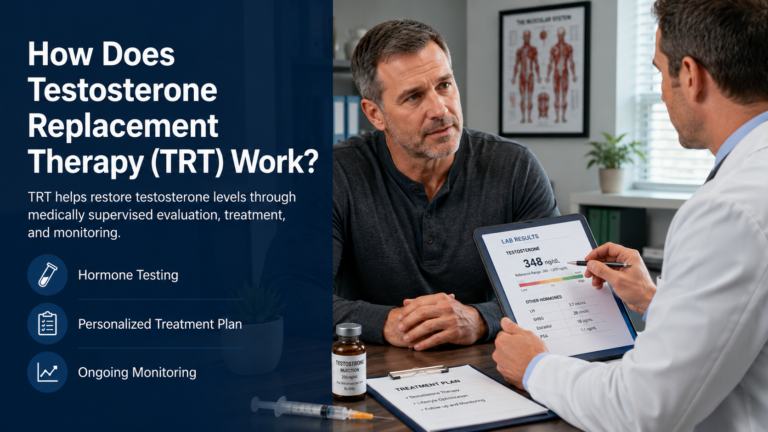
Reputable online TRT providers deliver a structured treatment protocol that mirrors in-person endocrinologist care. According to the American Urological Association’s 2023 guidelines, legitimate virtual hormone treatment includes:
- Initial virtual consultation with board-certified physicians (typically 30-45 minutes via video appointment)
- Comprehensive hormone panel measuring total testosterone, free testosterone, estradiol, LH, FSH, SHBG, PSA test, hematocrit, and hemoglobin
- Medical history review including contraindications screening and informed consent documentation
- Prescription testosterone (testosterone cypionate or testosterone enanthate) from verified compounding pharmacies or FDA-approved brands like AndroGel and Testim
- Treatment protocol documentation with specific dosage instructions and administration schedules
- Follow-up care including 6-8 week blood work and dosage adjustment consultations
- Remote patient monitoring through digital health platforms with secure HIPAA-compliant messaging
Services typically not included in base pricing: advanced fertility preservation, in-person physical examinations, emergency medical care, insurance claim filing assistance, and non-testosterone hormone optimization.
Cost Breakdown: Online TRT vs Traditional Care in 2025

| Service Component | Online TRT Cost | Traditional In-Person Cost |
|---|---|---|
| Initial Consultation | $0-$199 | $200-$400 |
| Comprehensive Blood Test | $99-$350 | $150-$500 |
| Monthly Medication | $99-$299 | $150-$400 |
| Follow-Up Appointments (quarterly) | $0-$99 | $150-$300 |
| Annual Total (Out-of-Pocket) | $1,500-$3,800 | $2,400-$5,600 |
According to 2025 market analysis from the Digital Health Coalition, legitimate online hormone doctors charge $150-$300 monthly for all-inclusive remote TRT management. Insurance coverage remains limited—fewer than 25% of telehealth TRT services accept traditional health insurance as of January 2025. Most patients pay out-of-pocket costs, though some platforms accept HSA/FSA payments for prescription medication and lab work requirements.
Safety Standards: How to Evaluate Online Testosterone Clinics
Federal and State Licensing Requirements
The FDA does not directly approve telemedicine platforms, but legitimate telehealth providers must comply with multiple regulatory frameworks. Licensed telehealth providers operate under state medical board jurisdiction where the patient resides. According to DEA regulations updated in 2023, testosterone (classified as Schedule III controlled substances) requires:
- Valid physician-patient relationship established through synchronous audiovisual consultation
- Medical license active in the patient’s state of residence
- DEA registration permitting controlled substance prescriptions
- Compliance with state-specific telemedicine consent forms and documentation
Red Flags for Illegitimate Online Testosterone Clinics
According to the National Association of Boards of Pharmacy’s 2024 safety report, warning signs include:
- No required blood work before prescribing—legitimate providers mandate comprehensive hormone panel testing
- Instant prescriptions without virtual health assessment or medical history review
- Unlicensed physicians or providers without verifiable credentials through state medical boards
- Non-FDA approved compounds marketed as “pharmaceutical-grade hormones” without proper verification
- Promises of specific results violating medical advertising standards
- No follow-up monitoring or remote side effect tracking protocols
- Offshore pharmacies or unverified medication sources bypassing regulated online pharmacies
Credentialing Verification Process
Evaluating online TRT clinic credentials requires checking three databases. First, verify medical licenses through the Federation of State Medical Boards (FSMB.org). Second, confirm DEA registration numbers through the DEA’s practitioner search tool. Third, review disciplinary actions via state-specific medical board websites. Board certification in endocrinology, urology, or family medicine adds credibility but is not legally required for testosterone prescribing.
Expected Benefits and Treatment Outcomes
Clinical Efficacy of Remote Testosterone Therapy
A 2024 study in the Journal of Clinical Endocrinology compared telemedicine TRT outcomes to traditional care across 1,847 patients with hypogonadism. Results showed no statistically significant difference in testosterone level normalization (89% vs. 91% achieving therapeutic range) or patient-reported symptom improvement when proper remote diagnosis accuracy and virtual treatment plans were followed.
Patients using accredited telemedicine services reported these benefits within 12 weeks:
- Improved energy levels (78% of patients)
- Enhanced libido and sexual function (71% of patients)
- Better mood stability (65% of patients)
- Increased muscle mass with resistance training (58% of patients)
- Reduced body fat percentage (52% of patients)
Many men start TRT specifically for that libido benefit. If erectile function is your main concern, our TRT Clinic also treats that directly, with options that can work alongside or instead of TRT. You can find out what’s right for you by visiting our TRT Clinic.
Return on Investment Analysis
Beyond clinical outcomes, evaluating online TRT safety includes analyzing convenience ROI. Patients save an average of 12-18 hours annually by eliminating in-person clinic visits, according to 2025 data from the American Telemedicine Association. Online medication delivery eliminates 6-8 pharmacy trips yearly. Virtual follow-up appointments provide flexible scheduling across time zones, particularly beneficial for patients in rural areas lacking local endocrinologists.
Who Should Use Online TRT Services
Ideal Candidates for Telehealth Hormone Replacement
Legitimate virtual testosterone therapy works best for:
- Men aged 25-65 with confirmed low testosterone (below 300 ng/dL on two separate morning blood tests)
- Patients with hypogonadism symptoms unresponsive to lifestyle interventions
- Individuals living 50+ miles from specialized hormone clinics or urologists
- Patients comfortable with self-administration of injectable testosterone
- Those with stable medical conditions requiring minimal in-person monitoring
- Men who have completed fertility planning or use concurrent fertility preservation
Who Should NOT Use Telemedicine TRT
According to the Endocrine Society’s 2024 clinical practice guidelines, online hormone therapy is inappropriate for:
- Men with untreated prostate cancer (elevated PSA test or abnormal digital rectal exam)
- Patients with severe polycythemia (hematocrit above 54%)
- Individuals with uncontrolled heart failure or recent cardiovascular events
- Those requiring complex androgen deficiency workup to determine hypogonadism cause
- Patients preferring topical testosterone (AndroGel, Testim) requiring transfer risk assessment
- Men actively pursuing fertility without expert reproductive endocrinology guidance
- Individuals with severe needle phobia unable to self-inject testosterone cypionate
Alternatives to Online Testosterone Replacement Therapy
Traditional In-Person Hormone Clinics
Primary care physicians, endocrinologists, and urologists offer testosterone deficiency diagnosis with comprehensive physical examinations. In-person care provides immediate adverse effects assessment and same-day treatment protocol adjustments. However, wait times average 4-8 weeks for specialist appointments in metropolitan areas, according to 2025 data from the Medical Group Management Association.
Anti-Aging and Wellness Centers
Dedicated men’s health clinics and wellness centers provide hormone optimization services beyond medical necessity treatment. These facilities typically offer additional therapies (HCG, peptides, nutritional counseling) not available through standard telehealth platforms. Costs range $400-$800 monthly without insurance coverage acceptance.
Compounding Pharmacy Direct Programs
Some regulated online pharmacies offer physician partnership programs where patients receive virtual medical evaluation bundled with medication delivery. This model reduces administrative overhead but may limit provider choice and second-opinion options.
Evaluating Specific Online TRT Platforms: Safety Checklist
Before selecting a virtual hormone optimization clinic, verify these ten safety criteria:
- Multi-state licensure allowing interstate prescribing through proper state-by-state telemedicine registration
- Synchronous video consultations establishing compliant patient-provider relationships (not asynchronous-only communication)
- Detailed informed consent documenting TRT side effects, monitoring requirements, and treatment expectations
- CLIA-certified lab partnerships for accurate hormone level testing and remote blood work
- Transparent pricing with itemized costs for consultation, lab work, medication, and follow-up care
- Responsive patient support providing virtual patient education and medication delivery tracking
- Evidence-based protocols following clinical guidelines from major medical societies
- Clear privacy policies ensuring HIPAA compliance and digital medical records security
- Medication source disclosure specifying FDA-approved testosterone brands or accredited compounding pharmacies
- Structured monitoring schedule including mandatory 6-week, 3-month, and 6-month lab testing
Trustworthy telemedicine services provide verifiable answers to all patient questions regarding telemedicine quality standards and digital health platforms security.
State-Specific Regulations and Telemedicine Licensing Considerations
Testosterone prescribing laws vary significantly across states. Texas requires in-person examination before any controlled substance prescription, effectively prohibiting pure telehealth TRT for new patients as of 2025. California mandates physicians hold active California medical licenses to prescribe to California residents, regardless of where the telemedicine company operates. New York permits telemedicine TRT but requires 90-day in-person follow-up examinations.
According to the Center for Connected Health Policy’s 2025 State Telehealth Laws database, 34 states now accept synchronous video as sufficient for establishing physician-patient relationships for testosterone therapy. Sixteen states maintain additional restrictions requiring initial in-person visits or periodic physical examinations.
Quality Indicators: Separating Credible Hormone Therapy from Questionable Services
Professional telehealth services demonstrate measurable quality standards. According to the Telehealth Certification Institute, top-tier platforms achieve:
- Board certification rates exceeding 95% among prescribing physicians
- Patient satisfaction scores above 4.5/5.0 based on verified virtual clinic reviews
- Treatment protocol adherence matching academic medical center standards
- Transparent online provider credentials publicly accessible through provider profiles
- Published clinical outcomes data demonstrating testosterone level normalization rates
- Third-party accreditation from organizations like URAC or The Joint Commission
Final Verdict: Is Online TRT Safe and Worth the Investment?
Online TRT is both safe and cost-effective when obtained through legitimate, licensed telehealth providers that meet federal and state regulatory requirements—reducing annual treatment costs by 30-40% compared to traditional care while maintaining equivalent clinical outcomes. For more information on evaluating providers, visit is online TRT safe and legitimate.
Conditional Recommendation
Choose online testosterone replacement therapy if you:
- Verify provider credentials through state medical boards and DEA databases
- Confirm comprehensive blood testing occurs before prescription authorization
- Receive treatment from physicians licensed in your state of residence
- Obtain medications exclusively from verified, US-based pharmacies
- Commit to structured follow-up monitoring with regular hormone panels
Avoid telehealth TRT if providers:
- Skip blood work or offer prescriptions based solely on symptom questionnaires
- Cannot provide verifiable licensing information upon request
- Use offshore pharmacies or non-FDA approved testosterone compounds
- Guarantee specific results or use high-pressure sales tactics
- Lack structured protocols for adverse effects management and dosage adjustment
When evaluated properly, reputable online clinics deliver legitimate telemedicine testosterone prescriptions with medical-grade testosterone at significantly lower costs than traditional care. The key differentiator remains rigorous provider vetting—confirming qualified TRT doctors maintain proper licensing, follow evidence-based treatment protocols, and prioritize patient safety through appropriate remote medication monitoring and telemedicine safety protocols.
Frequently Asked Questions About Online TRT
Is it safe to manage TRT entirely through telehealth?
For many men, TRT can be managed safely through telehealth when it includes proper lab testing, a licensed provider, and ongoing monitoring. Reputable programs require bloodwork before and during treatment to track testosterone and related markers. Telehealth adds convenience, but safety depends on medical oversight—not skipping labs or follow-ups.
What should I look for in a legitimate telehealth TRT provider?
Look for licensed physicians, required baseline and follow-up bloodwork, and transparent pricing with no pressure to buy. A legitimate telehealth TRT provider reviews your labs and symptoms before prescribing, monitors your levels over time, and offers real clinical support. Avoid any service that prescribes hormones without testing or evaluation.