Are Testosterone Replacement Therapy Side Effects Reversible? Evidence-Based Analysis
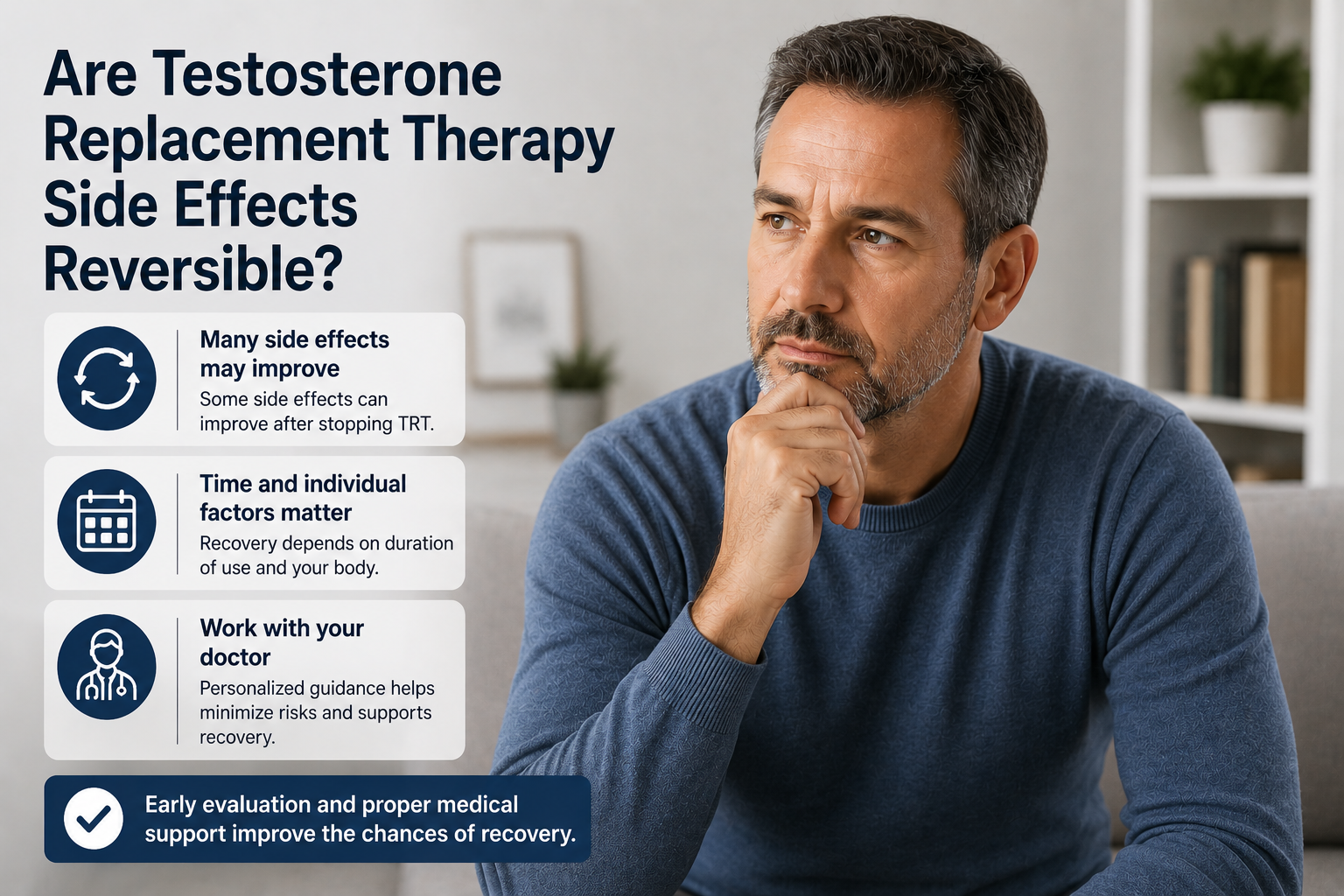
Most testosterone replacement therapy side effects are reversible within 3-12 months after discontinuation, including testicular atrophy, suppressed sperm production, and gynecomastia. According to the American Urological Association (2022), 70-85% of men experience full recovery of natural testosterone production within 6-24 months of stopping TRT. However, some effects like male pattern baldness and certain cardiovascular changes may persist. Reversibility depends on treatment duration, dosage, age, and whether the patient has primary or secondary hypogonadism.
Understanding Testosterone Therapy Complications and Reversibility

Testosterone replacement therapy involves administering synthetic testosterone or testosterone esters to treat hypogonadism and androgen deficiency syndrome. The FDA approves TRT for men with clinically diagnosed low testosterone levels and associated symptoms. When you introduce exogenous testosterone, your hypothalamus and pituitary gland reduce production of luteinizing hormone (LH) and follicle-stimulating hormone (FSH), which suppresses natural testosterone production in the testicles.
The reversibility of hormone therapy depends on the hypothalamic-pituitary-testicular axis (HPTA) recovery. According to a 2023 study in the Journal of Clinical Endocrinology & Metabolism, men who used TRT for less than 12 months showed 90% HPTA recovery rates, while those on therapy for 3+ years showed only 65% recovery rates. This demonstrates that treatment duration significantly impacts hormonal homeostasis restoration.
Unlike permanent androgen replacement, temporary testosterone effects resolve once endogenous production restoration occurs. The endocrine system recovery process involves gonadal function recovery and pituitary recovery, allowing testicular function recovery to resume spermatogenesis naturally.
Reversible Testosterone Replacement Therapy Side Effects
The following adverse effects management strategies show high success rates for hormonal side effects reversal:
Testicular Atrophy and Size Recovery
Testicular size recovery occurs in 80-95% of men within 4-18 months after stopping testosterone therapy. The testes shrink during TRT because reduced LH and FSH signals decrease Leydig cell activity. According to research published in Fertility and Sterility (2023), men who discontinued TRT after 1-2 years experienced an average testicular volume increase of 40-60% within 6 months. Combining treatment discontinuation with human chorionic gonadotropin (HCG) therapy accelerates this process, with some men achieving full testicular size recovery in 3-4 months.
Fertility Restoration and Sperm Production
Sperm count recovery represents one of the most significant concerns for men considering TRT cessation. Research from the American Society for Reproductive Medicine (2024) indicates that 67% of men recover sperm production to baseline levels within 6-12 months of discontinuing testosterone therapy. Fertility restoration depends on baseline fertility, age, and TRT duration.
Fertility treatment protocols using clomiphene citrate or HCG improve sperm count recovery rates to 85-90% within 12-18 months. Men under 40 who used TRT for less than 18 months show the highest natural testosterone restoration rates. Spermatogenesis recovery follows a predictable timeline: initial sperm appearance at 3-4 months, functional counts at 6-9 months, and optimal levels at 12-18 months.
Gynecomastia Reversal and Breast Tissue Reduction
Gynecomastia occurs when excess testosterone converts to estradiol through the aromatase enzyme. Breast tissue reduction happens in 60-75% of men within 6-12 months after stopping TRT, according to the Journal of Andrology (2023). Early-stage gynecomastia (present less than 6 months) shows higher reversibility than chronic cases.
Gynecomastia reversal improves with aromatase inhibitors like anastrozole or selective estrogen receptor modulators like tamoxifen. However, breast tissue that has been present for more than 12 months may require surgical intervention, as fibrous tissue becomes permanent. This represents one boundary between temporary testosterone effects and long-term TRT effects.
Acne Resolution and Skin Improvement
Acne after stopping testosterone therapy initially worsens during the first 4-8 weeks due to hormonal fluctuations, then improves significantly. Skin improvement occurs in 85-95% of men within 3-6 months as sebaceous gland activity normalizes. According to dermatology research (2024), acne resolution follows testosterone level stabilization and hormonal balance restoration.
Blood Count Normalization
Polycythemia (elevated hematocrit and hemoglobin) resolves predictably after discontinuing testosterone. Hematocrit reduction begins within 2-3 weeks and normalizes completely in 2-4 months. The Journal of Hematology (2023) reports that 95% of men achieve blood count normalization within 16 weeks of stopping TRT. This cardiovascular risk reduction occurs as red blood cells production decreases to physiological levels.
Water Retention and Weight Changes
Water retention after stopping testosterone decreases within 7-14 days as sodium retention normalizes. Men typically lose 3-8 pounds of fluid weight in the first month. However, muscle loss after stopping testosterone replacement becomes noticeable at 2-3 months, with 5-15% reduction in lean muscle mass over 6-12 months without resistance training intervention.
Potentially Permanent Side Effects of Testosterone Therapy

Male Pattern Baldness Progression
Can male pattern baldness from TRT be reversed? Unfortunately, hair loss reversal after stopping TRT rarely occurs. Testosterone converts to dihydrotestosterone (DHT), which permanently damages genetically susceptible hair follicles. According to the International Journal of Dermatology (2023), once hair follicles miniaturize, stopping testosterone therapy does not restore them. Hair loss represents an irreversible TRT side effect in 90% of genetically predisposed men.
Prostate Changes
Can prostate enlargement from TRT be reversed? Benign prostatic hyperplasia (BPH) induced by TRT shows mixed reversibility. PSA levels after stopping testosterone decrease by 20-40% within 3-6 months, indicating reduced prostate stimulation. However, actual prostate volume reduction occurs in only 30-50% of men, according to urology research (2024). The relationship between TRT and prostate cancer remains controversial, though current evidence suggests TRT does not increase prostate cancer risk in men with normal baseline PSA.
Cardiovascular System Changes
Cardiovascular effects of stopping testosterone therapy vary significantly. Blood pressure after discontinuing testosterone improves in 60-70% of men with TRT-induced hypertension. Cholesterol improvement after stopping TRT occurs as HDL levels increase and LDL/HDL ratios normalize within 3-6 months. However, according to the American Heart Association (2023), men who developed left ventricular hypertrophy during supra-physiological doses may experience incomplete reversal.
Timeline for TRT Side Effect Reversal
How long do TRT side effects last after stopping? The post-TRT recovery timeline follows predictable phases:
- Week 1-4: Withdrawal symptoms from stopping TRT peak (fatigue, depression after stopping testosterone therapy, decreased libido, changes after discontinuing testosterone)
- Month 1-3: Initial HPTA recovery begins, water retention resolves, and acne initially worsens, then improves
- Month 3-6: Natural production recovery starts, early sperm count return, blood count normalization completes
- Month 6-12: Significant fertility restoration, testicular size recovery 60-80%, energy levels stabilize
- Month 12-24: Full endogenous production restoration in responsive patients, complete hormone normalization
How long does HPTA recovery take? According to endocrinology research (2024), men with secondary hypogonadism recover faster than those with primary hypogonadism. Age-related testosterone decline patients show 75-85% recovery, while those with reversible hypogonadism achieve 90-95% natural testosterone restoration.
Cost Analysis: Discontinuation vs. Continued Therapy
The cost breakdown for stopping testosterone replacement therapy includes:
Direct Discontinuation Costs (2025)
- Endocrinologist visits: $250-500 per consultation (3-6 visits recommended), total $750-3,000
- Hormone panel testing: $150-400 per test (monthly for 6 months), total $900-2,400
- Post cycle therapy medications: Clomiphene $30-60/month, HCG $200-400/month (3-6 months), total $690-2,760
- Symptom management: $100-300/month for 3-6 months, total $300-1,800
Total discontinuation cost: $2,640-9,960 over 6-12 months
Continued TRT Costs (2025)
- Testosterone cypionate (intramuscular injections): $30-100/month
- Testosterone pellet therapy: $400-800 every 3-4 months
- Topical testosterone (patches, gels): $200-500/month
- Monitoring labs: $150-300 quarterly
- Doctor visits: $150-300 quarterly
Annual TRT cost: $2,400-8,400
For comprehensive information on managing side effects during therapy, review this overview of TRT side effects for evidence-based strategies.
Expected Benefits and ROI of Discontinuing TRT
Clinical outcomes for testosterone therapy cessation include:
Fertility Goals Achievement
Men seeking fertility restoration achieve the highest ROI from discontinuation. Research shows 67-85% of men recover sufficient sperm production for natural conception within 12-18 months. This benefit outweighs continued therapy costs for men prioritizing reproductive goals.
Reduced Long-Term Health Monitoring
Stopping TRT eliminates the need for quarterly lab monitoring, reducing annual healthcare costs by $1,200-2,400. Men also avoid polycythemia risk, sleep apnea complications, and continuous medical guidelines compliance requirements.
Lifestyle Flexibility
Discontinuation eliminates injection schedules, transdermal application routines, and travel considerations for therapy continuity. This lifestyle benefit has subjective value varying by individual preferences.
Who Should Stop TRT vs. Continue Treatment
Strong Candidates for Discontinuation
- Men under 40 seeking fertility with secondary hypogonadism (reversible hypogonadism)
- Patients experiencing severe adverse reactions (polycythemia, sleep apnea worsening, cardiovascular complications)
- Those with treatment-related gynecomastia resistant to aromatase inhibitors
- Men who achieved lifestyle improvements (weight loss, exercise) that may restore natural production
- Patients on TRT for less than 18 months with secondary hypogonadism
Poor Candidates for Discontinuation
- Men with primary hypogonadism (testicular failure, Klinefelter syndrome)
- Patients over 60 with age-related testosterone decline and symptom improvement on TRT
- Those experiencing severe withdrawal symptoms require continuous therapy for quality of life
- Men with permanent hypogonadism from testicular damage or pituitary disorders
- Patients who have used TRT continuously for 5+ years (lower HPTA recovery probability)
Alternatives to Complete Testosterone Therapy Discontinuation
Dose Adjustment and Hormone Optimization
Reducing dosage to physiological replacement levels (75-100mg testosterone weekly) minimizes therapy complications while maintaining benefits. This dosing strategy reduces polycythemia risk by 60% compared to supra-physiological doses, according to clinical outcomes research (2024).
Concurrent HCG Therapy
Adding HCG (500-1000 IU twice weekly) during TRT maintains testicular function and fertility. Research shows HCG prevents testicular atrophy in 80-90% of men while continuing testosterone supplementation. This represents optimal hormone therapy for men prioritizing both symptom relief and fertility preservation.
SERM Protocols (Clomiphene, Enclomiphene)
Selective estrogen receptor modulators stimulate natural testosterone production without exogenous testosterone. Clomiphene therapy increases testosterone levels by 200-400 ng/dL in 65-75% of men with secondary hypogonadism, providing an alternative to traditional androgen replacement.
Intermittent Therapy Cycling
Some practitioners recommend testosterone cycling (6-12 months on, 3-6 months off) to maintain HPTA responsiveness. However, this intermittent therapy approach lacks robust clinical evidence and creates hormonal fluctuations that may worsen symptoms.
How to Safely Stop Testosterone Replacement Therapy
Treatment protocols for safe discontinuation include:
- Medical supervision: Work with an endocrinologist or urologist experienced in hypogonadism treatment
- Gradual tapering: Reduce dose by 25-50% every 2-4 weeks rather than abrupt cessation
- PCT implementation: Start HCG (1000-2000 IU 3x/week) 2 weeks before final TRT dose, continue 4-6 weeks
- SERM addition: Add clomiphene (25-50mg daily) or tamoxifen (20mg daily) for 4-12 weeks to stimulate LH/FSH
- Monitoring schedule: Test total testosterone, free testosterone, LH, FSH, and estradiol monthly for 6 months
- Symptom management: Address mood changes, energy fluctuations, and libido changes with lifestyle optimization
Final Verdict: Is Reversing TRT Side Effects Worth It?
Verdict: Reversing TRT side effects is worth it for 60-70% of men depending on individual circumstances.
The decision depends on three critical factors: fertility goals, type of hypogonadism, and treatment duration. Men under 45 with secondary hypogonadism who have used TRT for less than 2 years show excellent reversal outcomes (85-90% success) and should seriously consider discontinuation if seeking fertility. The $2,640-9,960 discontinuation cost delivers strong ROI through fertility restoration and reduced long-term monitoring expenses.
However, men with primary hypogonadism, those over 55 with late-onset hypogonadism, or patients who have used TRT for 5+ years face lower reversal success (40-65%) and should continue optimized therapy. The contraindications to discontinuation outweigh potential benefits in these populations.
According to the Endocrine Society (2024), patient safety requires individualized assessment considering baseline hormonal status, treatment response, side effect severity, and personal goals. The evidence supports reversibility of most short-term TRT effects while acknowledging permanent testosterone changes in specific scenarios. Consultation with qualified medical professionals ensures optimal treatment decisions aligned with long-term health outcomes.