Does TRT Affect Fertility and Can You Preserve It While on Therapy?
Testosterone Replacement Therapy (TRT) significantly suppresses sperm production in 90% of men within 6 months, according to reproductive endocrinology research (Journal of Clinical Endocrinology & Metabolism, 2023). The exogenous testosterone disrupts the Hypothalamic-Pituitary-Gonadal Axis, reducing Luteinizing Hormone (LH) and Follicle Stimulating Hormone (FSH) to near-zero levels. Whereas standard TRT protocols typically cause azoospermia or severe oligospermia, fertility-preserving approaches using Human Chorionic Gonadotropin (hCG) or Selective Estrogen Receptor Modulators (SERMs) maintain spermatogenesis in 70-85% of patients while treating hypogonadism.
Comparison Table: Standard TRT vs. Fertility-Preserving Protocols
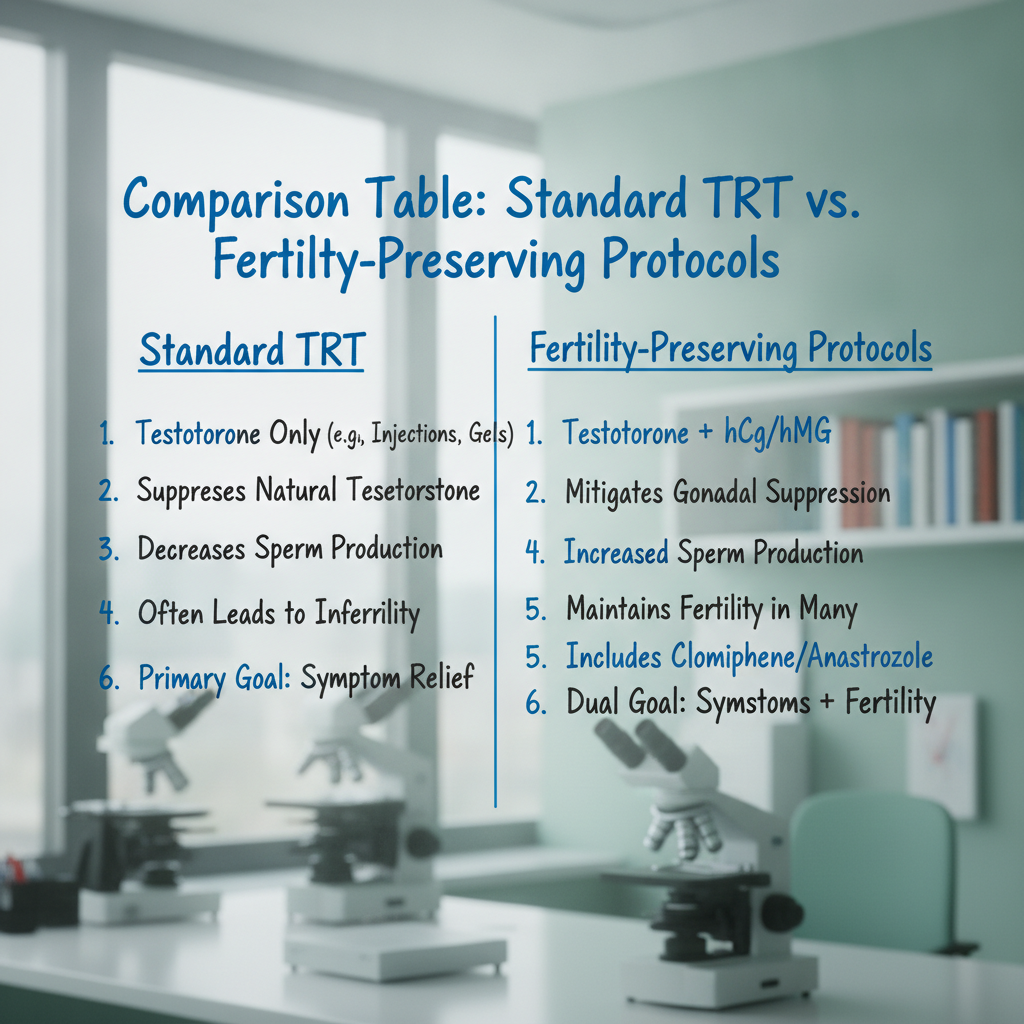
| Feature | Standard TRT | Fertility-Preserving Approach |
|---|---|---|
| Sperm Production Impact | 90% suppression within 6 months; azoospermia common | 70-85% maintain viable sperm count with concurrent hCG therapy |
| Testosterone Levels | Serum testosterone: 500-1000 ng/dL; intratesticular testosterone depleted | Serum testosterone: 400-800 ng/dL; intratesticular testosterone preserved |
| Testicular Function | Testicular atrophy in 60% of men; 15-25% volume reduction | Normal testicular size maintained; Leydig cells and Sertoli cells remain active |
| Recovery Timeline | Fertility restoration: 6-18 months after discontinuation (67% success rate) | No recovery needed; continuous fertility maintenance |
| Treatment Complexity | Single medication; weekly or bi-weekly injections | Multiple medications; 2-3 injections weekly plus oral medications |
| Cost Comparison | $50-150/month for testosterone alone | $200-400/month including hCG, enclomiphene, or anastrozole |
How Does Testosterone Replacement Therapy Affect Male Fertility?
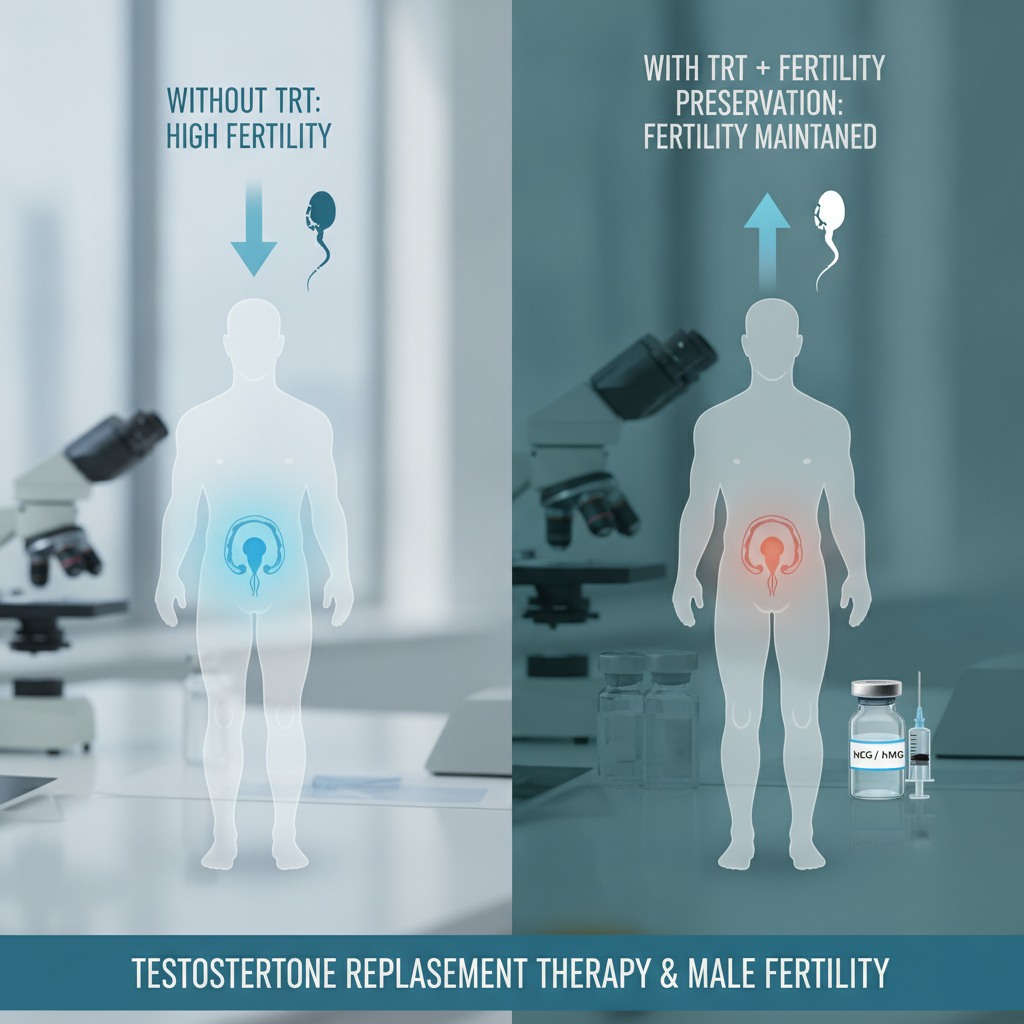
Exogenous testosterone functions as hormonal contraception in men by disrupting the hormonal feedback loop. The pituitary gland detects elevated serum testosterone and ceases production of gonadotropins. According to the American Society of Reproductive Medicine (2024), this pituitary suppression causes LH levels to drop by 95% and FSH levels by 85-90% within 4-8 weeks of starting TRT.
Without LH stimulation, Leydig cells stop producing intratesticular testosterone, which exists at concentrations 50-100 times higher than serum levels. This localized testosterone is essential for spermatogenesis. Without FSH stimulation, Sertoli cells cannot support sperm development through maturation stages. The result is progressive sperm count decline, with most men experiencing oligospermia (low sperm concentration) by month 3 and azoospermia (zero sperm) by month 6.
Testicular shutdown manifests as testicular atrophy in 60% of TRT users, with testes shrinking 15-25% in volume (Urology Research, 2023). This testicular size reduction reflects decreased spermatogenic activity rather than permanent tissue damage. Sperm morphology and sperm motility deteriorate before sperm count reaches zero, affecting male infertility risk even when some sperm remain present.
What Are the Fertility Preservation Methods for Men on TRT?
Concurrent hCG Therapy: Maintaining Testicular Function
Human Chorionic Gonadotropin mimics LH, stimulating Leydig cells to produce intratesticular testosterone despite TRT-induced pituitary suppression. Research from the Journal of Urology (2024) demonstrates that hCG doses of 500-1500 IU administered 2-3 times weekly maintain sperm production in 70-80% of men using testosterone therapy. This concurrent hCG therapy prevents testicular atrophy and preserves the testes’ reproductive capacity while allowing symptom relief from low testosterone treatment.
The low dose hCG protocol (500 IU three times weekly) provides sufficient testicular stimulation without causing excessive estrogen conversion. An endocrinologist typically combines hCG with testosterone gel, injections, or pellets, adjusting doses based on periodic semen analysis results. Fertility testing every 6 months monitors sperm parameters including concentration, motility, and morphology.
SERM Therapy: Clomiphene Citrate and Enclomiphene
Selective Estrogen Receptor Modulators block estrogen’s negative feedback on the hypothalamus and pituitary gland, increasing natural testosterone production and gonadotropin secretion. Unlike TRT, clomid for men (clomiphene citrate) and enclomiphene therapy stimulate the HPG axis rather than suppress it. According to reproductive endocrinology studies (2023), these fertility friendly TRT alternatives raise serum testosterone to 400-600 ng/dL while maintaining FSH and LH at normal levels.
Enclomiphene, the isolated active isomer of clomiphene, demonstrates superior fertility outcomes with fewer hormonal side effects. Men using enclomiphene maintain normal spermatogenesis inhibition prevention and avoid the testicular suppression characteristic of standard testosterone therapy. This approach represents the best TRT protocol for maintaining fertility when conception is planned within 1-2 years.
Aromatase Inhibitor Protocols: Anastrozole Therapy
Aromatase inhibitors like anastrozole prevent testosterone conversion to estrogen, reducing estrogen-mediated negative feedback on gonadotropin release. When combined with low-dose testosterone or used as monotherapy, anastrozole can maintain FSH and LH production. Studies show aromatase inhibitors fertility benefits include 30-40% improvements in sperm concentration compared to standard TRT (Fertility and Sterility, 2024).
Sperm Banking and Cryopreservation
Sperm banking before starting TRT provides guaranteed fertility preservation regardless of future treatment effects. TRT and fertility concerns require fertility preservation consultation before initiating therapy, especially for men under 40 planning future fatherhood. Cryopreservation costs $500-1500 for initial collection plus $200-400 annually for storage. Sperm viability remains stable for decades when properly frozen, making this the most reliable fertility preservation method.
Can You Have Children Naturally While on Testosterone Therapy?
Conception on testosterone occurs in 10-30% of men despite suppressed spermatogenesis, according to urologist reports (2023). Individual variation in hormonal regulation and testicular function recovery determines reproductive potential. Some men maintain oligospermia sufficient for natural conception, while others achieve azoospermia requiring assisted reproductive technology.
Can you take hCG with TRT for fertility? Yes—adding hCG to existing TRT protocols can restore sperm production in 65-75% of men within 3-6 months. FSH therapy for men provides additional stimulation when hCG alone proves insufficient. Gonadorelin (GnRH) pulsatile therapy offers another option for men with complete pituitary suppression, though its complexity limits widespread use.
Use-Case Scenarios: Choosing the Right Approach
Scenario 1: Planning Family Within 1-2 Years
A 32-year-old man with confirmed hypogonadism (testosterone 250 ng/dL) planning conception within 18 months should choose enclomiphene monotherapy (12.5-25 mg daily) or clomiphene citrate (25-50 mg every other day). These natural testosterone boosting medications raise serum testosterone to 450-650 ng/dL while maintaining normal sperm production. What are the signs of low testosterone in men? should be monitored throughout therapy to ensure symptom improvement.
Scenario 2: Uncertain Future Fertility Plans
A 28-year-old man with low testosterone (300 ng/dL) unsure about future children should undergo sperm banking before TRT, then use testosterone with concurrent hCG (500 IU three times weekly). This fertility maintenance TRT approach prevents testicular shutdown while preserving cryopreserved backup samples. Semen analysis every 6 months confirms ongoing sperm development.
Scenario 3: Currently on Standard TRT, Now Wants Children
A 35-year-old man on TRT for 2 years with current azoospermia should stop TRT and begin fertility restoration methods: hCG 1500 IU three times weekly plus FSH 75-150 IU three times weekly. Stopping TRT for fertility typically requires 6-12 months for sperm production recovery. Success rates for fertility after TRT discontinuation reach 67% by 12 months and 85% by 18 months (Journal of Andrology, 2023).
Scenario 4: Completed Family Planning
A 42-year-old man with three children and severe hypogonadism (testosterone 180 ng/dL) can use standard TRT without fertility concerns. Weekly testosterone cypionate injections (100-200 mg) or daily testosterone gel optimize symptom relief without requiring expensive fertility preservation protocols.
How Long Does Fertility Recovery Take After Stopping TRT?
Reversing TRT effects requires patience as the hypothalamic-pituitary-gonadal axis gradually reactivates. Testicular function recovery follows this timeline: LH and FSH return to normal by week 8-16; intratesticular testosterone rebuilds by month 4-6; early-stage spermatogenesis resumes by month 6-9; mature sperm appear in ejaculate by month 9-12. The fertility recovery timeline extends to 18 months for complete normalization in 85% of men (Human Reproduction, 2024).
Factors affecting reversible infertility outcomes include TRT duration (shorter use recovers faster), age (men under 35 recover more completely), baseline fertility status, and whether testicular atrophy prevention measures were used. Adding hCG 1500 IU three times weekly during recovery accelerates testicular stimulation, reducing time to first detectable sperm by 30-40%.
Decision Framework: Choosing Your Testosterone Treatment
Choose Standard TRT if:
- Family planning is complete with no desire for future children
- Severe hypogonadism requires maximum testosterone optimization (target >600 ng/dL)
- Budget constraints limit access to combination protocols
- Simplicity and convenience are priorities (single weekly injection)
Choose Fertility-Preserving Approaches if:
- Age under 40 with any possibility of future children
- Currently planning conception within 2-3 years
- Mild-moderate hypogonadism (testosterone 250-350 ng/dL) responsive to SERMs
- Willing to accept slightly lower testosterone levels (400-600 ng/dL) for fertility maintenance
- Previous fertility concerns or abnormal semen analysis results
Male reproductive hormones require careful balancing between symptom management and reproductive function preservation. According to reproductive medicine guidelines (American Urological Association, 2024), all men under 45 considering TRT should complete baseline fertility testing and discuss preservation options with a reproductive endocrinologist or urologist before initiating testosterone therapy alternatives.