What’s the Difference Between Testosterone Injections, Gels, and Pellets? A Complete TRT Delivery Methods Comparison
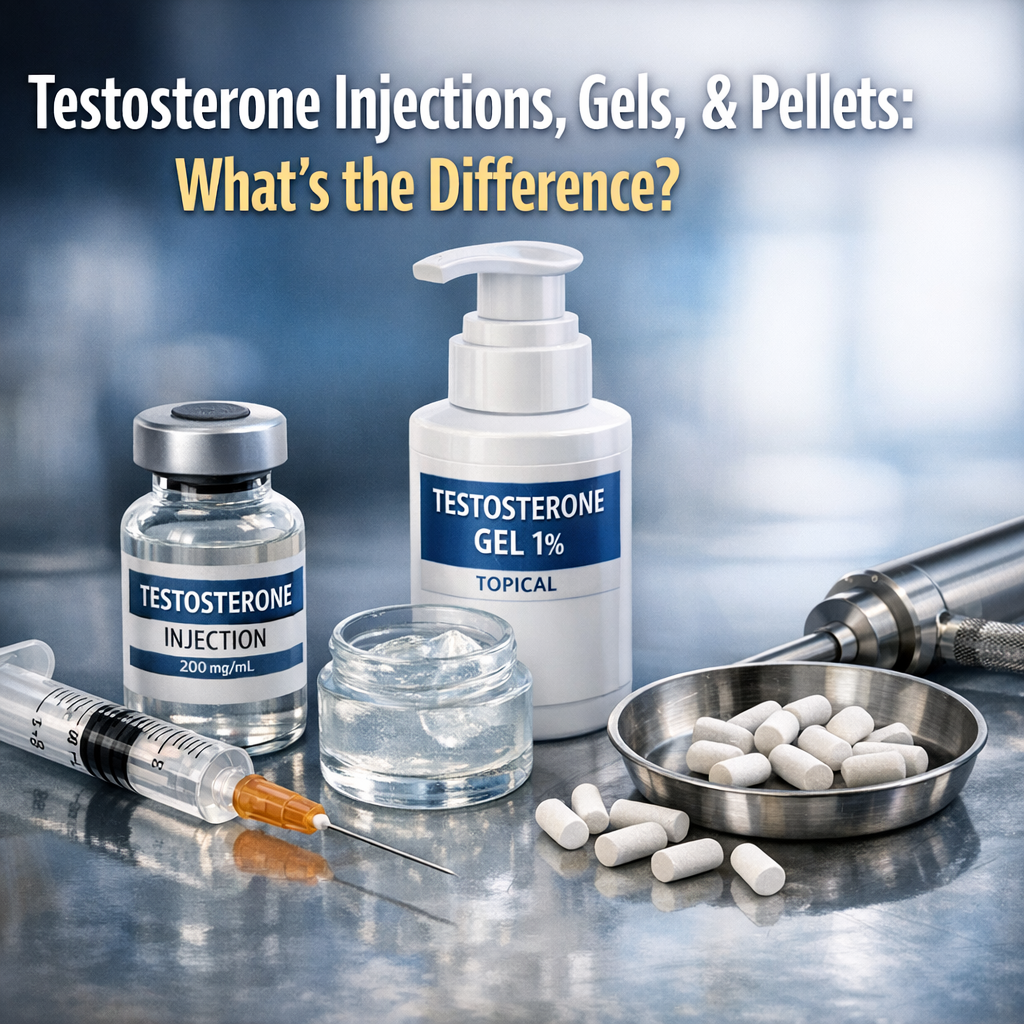
Testosterone replacement therapy (TRT) is a medical treatment that restores testosterone serum levels in men with hypogonadism or androgen deficiency through three primary delivery methods: intramuscular injections, transdermal gels, and subcutaneous pellets. Each testosterone administration route offers distinct advantages in hormone level optimization, treatment compliance, and patient preference.
According to the FDA (Food and Drug Administration), over 2.3 million men in the United States used prescription testosterone by 2023. Understanding the difference between testosterone injections gels and pellets enables patients and endocrinologists to select the most effective hormonal supplementation approach based on individual needs, lifestyle factors, and therapeutic testosterone levels.
Key Characteristics of Testosterone Delivery Methods
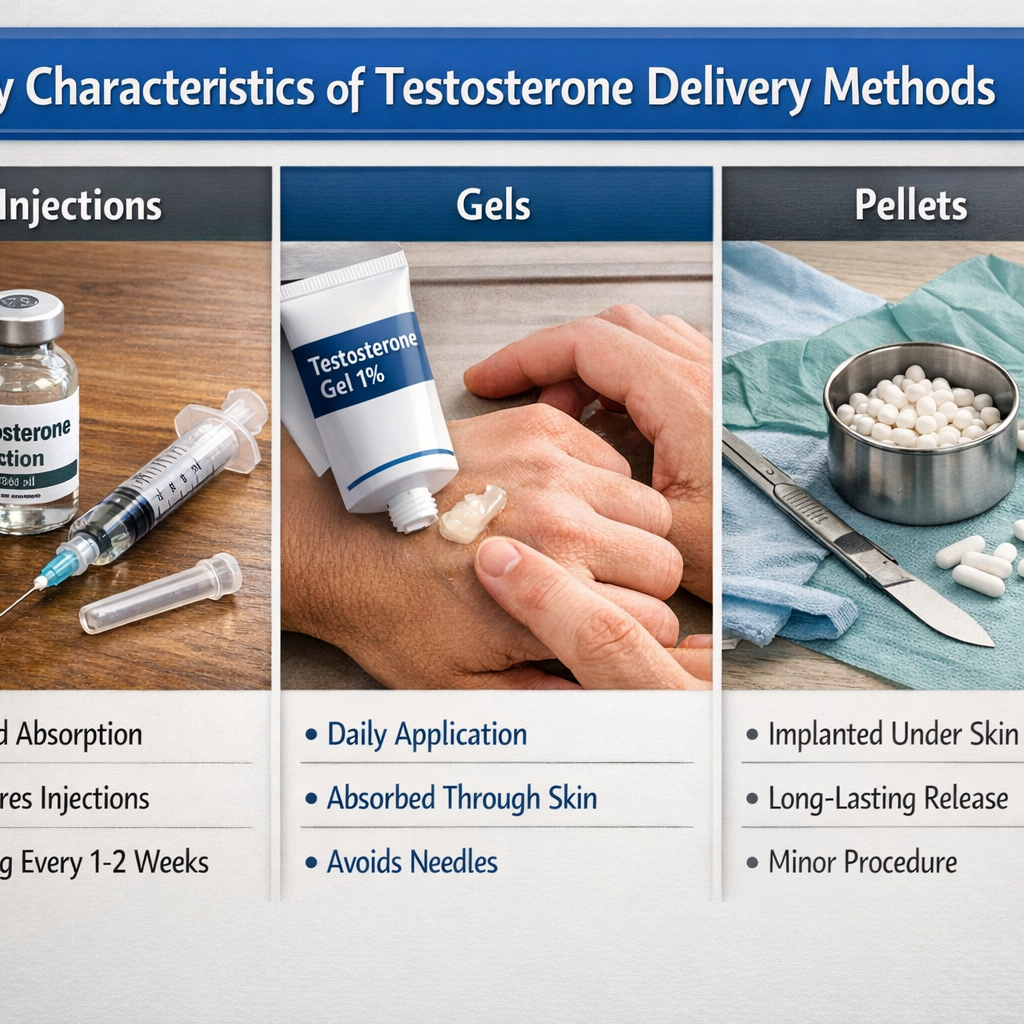
Testosterone injections deliver testosterone cypionate or testosterone enanthate directly into muscle tissue or subcutaneously, providing immediate bioavailable testosterone. Common FDA-approved formulations include Depo-Testosterone and Delatestryl. Injectable hormones achieve peak levels within 24-48 hours post-administration.
Testosterone gels such as AndroGel, Testim, Fortesta, Axiron, and Vogelxo provide transdermal testosterone absorption through daily topical application. These transdermal hormone delivery systems maintain steady-state testosterone by delivering consistent doses through the skin barrier.
Testosterone pellets (Testopel) are bioidentical hormones implanted subcutaneously through a minor procedure by a urologist or endocrinologist. These implantable testosterone systems provide sustained hormone release over 3-6 months through continuous dissolution.
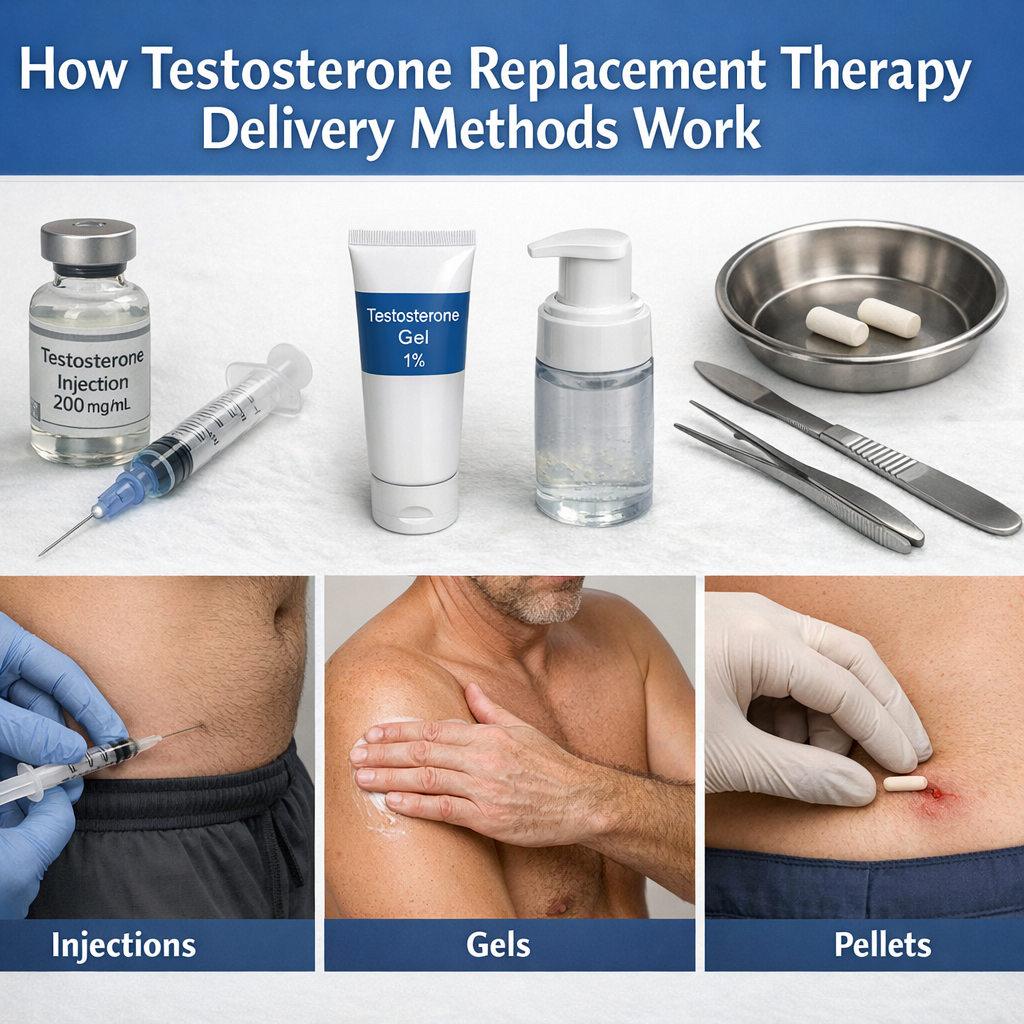
How Testosterone Replacement Therapy Delivery Methods Work
Testosterone Injection Technique and Pharmacokinetics
Intramuscular injection administration involves self-injection or clinical injection into the gluteal muscle or thigh. Testosterone cypionate injection frequency typically ranges from weekly to biweekly dosing. The half-life of testosterone cypionate spans 8 days, creating predictable peak and trough levels testosterone injections experience.
Testosterone undecanoate (Aveed) offers long-acting testosterone with 10-week intervals between depot injections. The absorption rate varies based on injection site selection and technique, affecting serum testosterone levels and free testosterone availability.
Testosterone Gel Application and Absorption
How to apply testosterone gel properly determines treatment efficacy. Daily application schedule requires patients to spread testosterone solution or testosterone cream on shoulders, upper arms, or abdomen. Transdermal gel absorption occurs over 2-6 hours, with steady testosterone levels maintained through consistent use.
The bioavailability of testosterone injections vs gel differs significantly—injections offer 100% bioavailability while topical testosterone achieves 9-14% absorption. Despite lower absorption rate testosterone gel vs injection shows, daily dosing prevents testosterone level fluctuations with injections.
Testosterone Pellet Implantation Procedure
Where are testosterone pellets implanted? A urologist performs the testosterone pellet implantation procedure in-office, inserting 10-12 pellets into the subcutaneous fat of the hip or buttock. How are testosterone pellets inserted involves local anesthesia, a small incision, and trocar placement—the surgical implantation takes 10-15 minutes.
How long do testosterone pellets last compared to injections? Pellets provide sustained release for 3-6 months versus weekly or biweekly injections. Testosterone pellet replacement schedule depends on individual metabolism, body composition, and therapeutic monitoring.
Testosterone Injections vs Gels vs Pellets: Effectiveness Comparison
| Method | Bioavailability | Steady-State Achievement | Peak Levels Timing |
|---|---|---|---|
| Testosterone Shots | 100% | Not maintained | 24-48 hours |
| Testosterone Topical | 9-14% | 7-14 days | 2-6 hours daily |
| Implantable Hormones | ~100% | 3-4 weeks | Continuous |
According to a 2024 meta-analysis published in the Journal of Clinical Endocrinology, testosterone pellets sustained release provides the most stable total testosterone and SHBG (sex hormone binding globulin) ratios over time. Conversely, intramuscular testosterone creates higher dihydrotestosterone (DHT) conversion and estradiol through aromatization.
Advantages and Disadvantages of Each TRT Method
Pros and Cons of Testosterone Injections
Benefits of testosterone injections: cost effectiveness (typically $30-100 monthly), patient control through self-administering testosterone injections, and immediate therapeutic response. How quickly do testosterone injections work? Most men report symptom improvement within 3-4 weeks.
Drawbacks: Testosterone injection side effects include injection site reactions, testosterone peaks and troughs causing mood fluctuations, and needle anxiety. How often do you need testosterone injections vs gels? Weekly or biweekly administration versus daily gel application represents the primary convenience comparison.
What Are the Advantages of Testosterone Gels
Testosterone gel benefits: Non-invasive application, maintaining consistent testosterone with gel formulations, and dose adjustment flexibility through testosterone titration. The most convenient testosterone replacement method for needle-averse patients, gels avoid injection discomfort.
Limitations: Higher testosterone cost ($300-500 monthly), transfer risk to partners and children, and strict application requirements. Side effects of testosterone injections vs gels vs pellets show gels cause more skin irritation and require lifestyle modifications regarding skin contact.
Benefits of Testosterone Pellets Over Injections
Pellet advantages: Sustained hormone release eliminates testosterone level fluctuations, requires only 2-4 annual procedures, and provides superior treatment compliance. Do testosterone gels provide stable levels comparable to pellets? Clinical data shows pellets maintain tighter normal testosterone range control.
Disadvantages: Highest upfront cost comparison testosterone injections gels pellets ($700-1,500 per insertion), irreversible dosing once implanted, and potential pellet extrusion. Are testosterone pellets safer than injections? Both methods show similar long-term safety profiles when monitored appropriately.
Common Misconceptions About TRT Delivery Methods
Myth: Injectable hormones are anabolic steroids used for bodybuilding.
Reality: Doctor prescribed testosterone for hypogonadism differs from illicit anabolic steroid abuse. Clinical testosterone use under medical supervision maintains physiologic levels, not supraphysiologic doses.
Myth: Switching from testosterone injections to gel requires complete treatment restart.
Reality: Converting testosterone injection dose to gel involves pharmacokinetic calculations by an endocrinologist. Can you switch from testosterone injections to gel? Yes—testosterone titration allows seamless transition between testosterone formulations.
Myth: All testosterone therapy options provide identical results.
Reality: Pharmacology differences affect DHT conversion, estradiol levels, and peak levels timing. Which testosterone delivery method has fewer side effects depends on individual metabolism and androgen receptor sensitivity.
How to Choose Between Testosterone Injections, Gels, and Pellets
Choosing TRT method requires evaluating multiple factors through tailored approach discussions with a urologist or endocrinologist. TRT delivery methods compared show personalized therapy selection depends on:
- Lifestyle compatibility: Self-injection capability versus daily gel application versus quarterly pellet procedures
- Cost considerations: Insurance coverage for testosterone injections gels pellets varies—out-of-pocket expenses differ substantially
- Desired testosterone stability: Men seeking steady testosterone levels with pellets vs injections may prefer implantable hormones
- Administration convenience: Injection frequency versus application schedule impacts treatment compliance
- Medical history: Skin conditions may preclude topical testosterone; bleeding disorders affect injection safety
Before starting any male hormone therapy, men should undergo comprehensive lab value tracking including total testosterone, free testosterone, estradiol, and SHBG. Recognizing signs of low testosterone prompts appropriate endocrine treatment evaluation.
Optimal Delivery Method Selection for Individualized Treatment
Which is better testosterone injections gels or pellets? No single best testosterone option exists—optimal delivery method depends on patient preference, therapeutic testosterone levels achieved, and treatment affordability. According to 2025 clinical guidelines, individualized treatment selection should prioritize:
- Achieving therapeutic testosterone levels (300-1,000 ng/dL total testosterone)
- Minimizing testosterone side effects through hormone monitoring
- Maximizing treatment compliance through administration convenience
- Considering cost effectiveness and insurance reimbursement
When do testosterone pellets start working compared to other methods? Pellets reach steady-state within 3-4 weeks, similar to achieving stable levels with weekly injections. How quickly do testosterone injections work versus gels? Injections produce noticeable effects within 3-4 weeks; gels require 4-6 weeks for full therapeutic response.
Switching from testosterone gel to pellets or converting between any testosterone preparations requires medical supervision and careful testosterone monitoring through hormone blood tests. The easiest way to take testosterone replacement therapy balances efficacy, safety, and personal lifestyle factors through shared decision-making with qualified healthcare providers.