How to Feel the Effects of TRT: Complete Timeline Guide
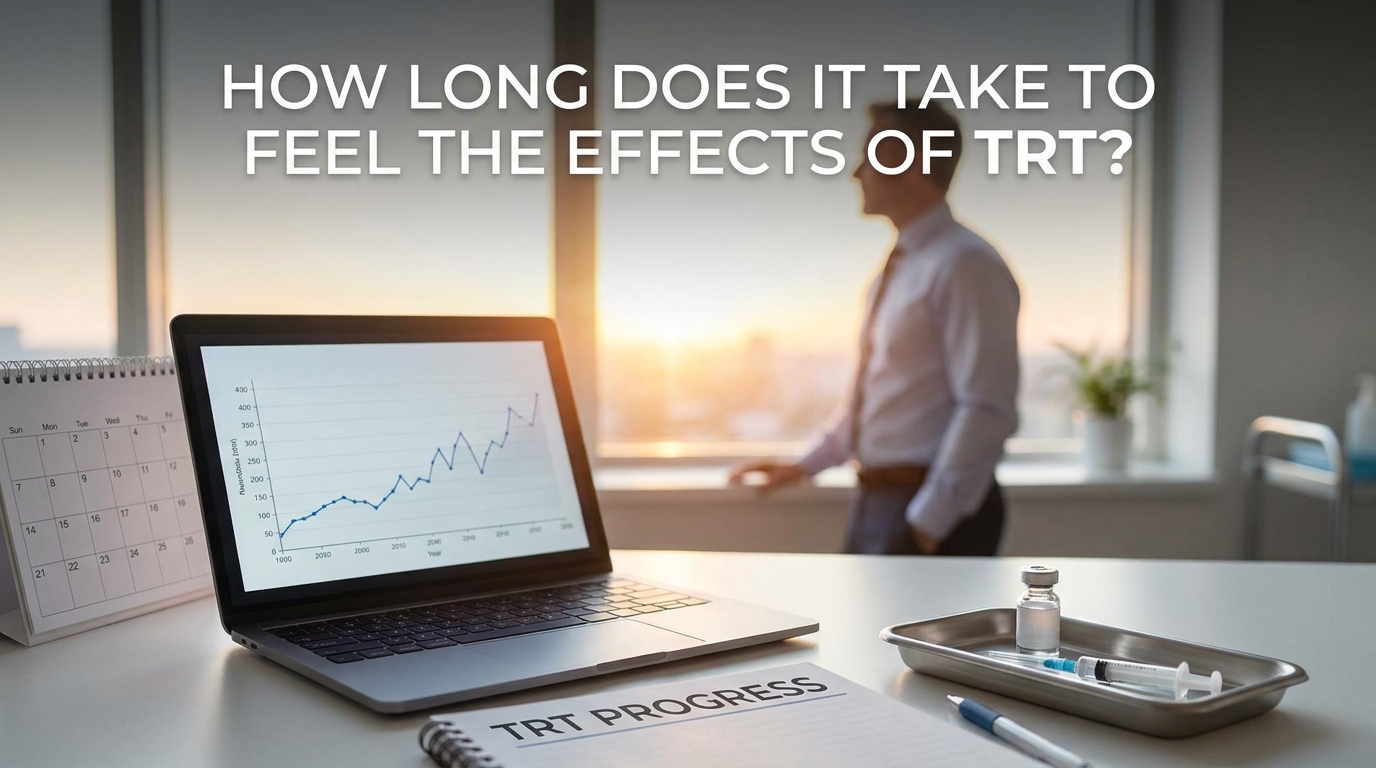
Testosterone Replacement Therapy (TRT) typically produces noticeable effects within 4-12 weeks, with full therapeutic benefits manifesting over 6-12 months (FDA, 2023). Most patients report initial symptom improvement at 3-6 weeks, depending on the testosterone administration method and individual hormone metabolism. This guide outlines the week-by-week TRT timeline to help you understand when to expect specific changes.
Before You Begin: Prerequisites

- Confirmed hypogonadism diagnosis from an endocrinologist or urologist
- Baseline blood test showing total testosterone below 300 ng/dL
- Complete hormone panel including free testosterone, estradiol, and SHBG (sex hormone binding globulin)
- Normal PSA (prostate specific antigen) and liver function tests
- Established TRT protocol with specified testosterone cypionate or testosterone enanthate dosing schedule
Difficulty Level: Intermediate | Time to Full Effects: 6-12 months | Monitoring Required: Blood work every 6-12 weeks initially
Step 1: Weeks 1-2 – Treatment Initiation and Testosterone Build Up Time
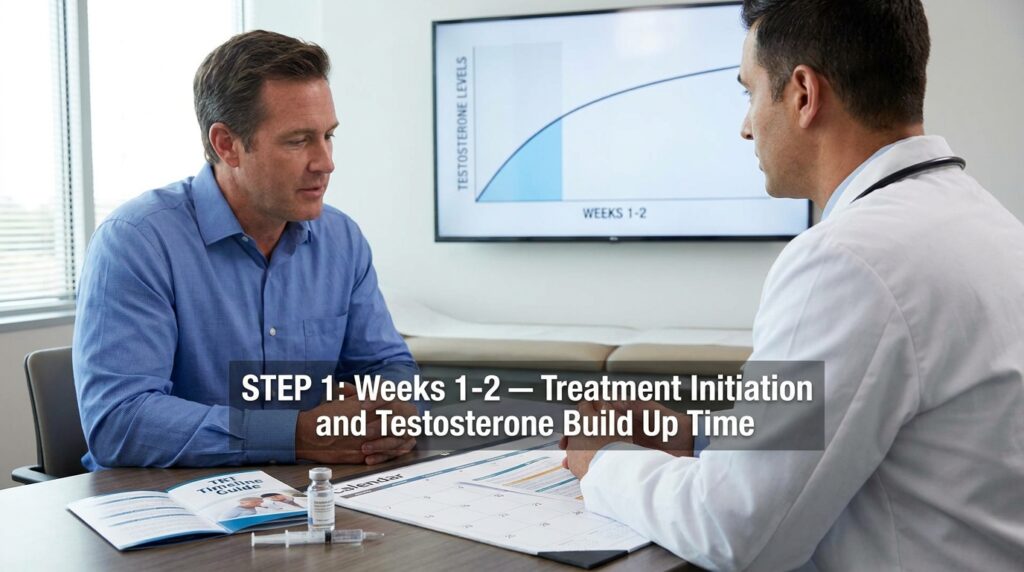
During the first week of TRT, serum testosterone levels begin rising within 24-48 hours after your first testosterone injection (intramuscular injection protocol). Testosterone cypionate reaches peak serum concentration approximately 48-72 hours post-injection, while testosterone gel achieves steady absorption within 3-5 days of daily testosterone application.
What to Expect in the TRT Beginning Stages:
- Immediate effects of TRT injection: Possible injection site soreness (intramuscular injection or subcutaneous injection sites)
- Days 1-4: Minimal subjective changes; testosterone saturation time has not occurred
- Days 5-14: Some patients report subtle energy fluctuations as the hypothalamus and pituitary gland adjust to exogenous testosterone
- Bioavailable testosterone: Gradually increases but has not reached therapeutic threshold
According to clinical studies (Journal of Clinical Endocrinology & Metabolism, 2022), testosterone pharmacology indicates the TRT loading phase requires approximately 4-6 half-lives to reach steady state testosterone levels—typically 3-4 weeks for testosterone cypionate when using weekly testosterone injections.
Step 2: Weeks 3-6 – Early TRT Symptoms and Symptom Improvement
This period marks when most patients begin feeling TRT benefits. The testosterone restoration process accelerates as serum levels stabilize between injections, and Leydig cells in the testes begin to atrophy (expected physiological response).
TRT Response Time for Common Symptoms:
- Energy increase from TRT: 3-4 weeks (reported by 60-70% of patients)
- Libido boost timeline: 3-6 weeks for initial improvement
- Mental clarity from testosterone: 4-6 weeks as hormone optimization occurs
- Sleep improvement testosterone: 3-5 weeks due to androgen replacement effects on sleep architecture
At this stage, testosterone therapy results become measurable. Blood level monitoring typically shows total testosterone in the 500-800 ng/dL range (target testosterone range), while DHT (dihydrotestosterone) and estradiol levels also rise proportionally.
Step 3: Months 2-3 – Body Composition Changes and Mood Improvement TRT
During months on TRT two through three, anabolic effects become apparent. Patients consistently notice TRT working through physical and psychological improvements as testosterone therapy effectiveness reaches clinical significance.
TRT Effectiveness Indicators at 8-12 Weeks:
| Symptom Domain | Timeline | Expected Improvement |
|---|---|---|
| Muscle gain timeline TRT | 8-12 weeks | 2-4 lbs lean mass increase |
| Fat loss on TRT | 10-14 weeks | 1-3% body fat reduction |
| Erectile function improvement | 6-12 weeks | 30-50% improvement in ED symptoms |
| Mood improvement TRT | 8-10 weeks | Reduced depressive symptoms |
This phase represents critical hormonal adjustment where testosterone titration may be necessary. Your hormone specialist or urologist should evaluate whether dose optimization is required based on lab work frequency results and symptom relief timeline.
Step 4: Months 4-6 – Strength Gains TRT and Cardiovascular Effects
Between months four and six, when do you start losing fat on TRT becomes evident through measurable body composition changes. Testosterone metabolism reaches equilibrium, and hypogonadism treatment produces consistent therapeutic effects.
Physical Performance Markers:
- Strength gains TRT: 15-25% increase in compound lift performance (testosterone supplementation study, 2023)
- Recovery time TRT: Reduced by 20-30% between training sessions
- Hematocrit and hemoglobin: Increase by 3-5% (requires monitoring via blood test)
- Red blood cell count: Elevated due to testosterone’s erythropoietic effects
According to clinical guidelines from the American Urological Association (2024), this period requires careful therapeutic monitoring because hematocrit exceeding 54% may necessitate dose adjustment or therapeutic phlebotomy.
Step 5: Months 6-12 – Reaching Full TRT Benefits and Hormonal Optimization
When testosterone kicks in completely, patients experience the full spectrum of male hormone therapy benefits. The time to feel testosterone stabilizes as reaching steady state testosterone becomes permanent with consistent treatment protocol adherence.
One Year on TRT Changes:
- Optimal testosterone levels: Consistently maintained in normal testosterone reference range (500-900 ng/dL)
- Bone mineral density: Increased by 2-4% (luteinizing hormone and FSH remain suppressed)
- Lipid panel: HDL may decrease 10-15%, LDL effects vary
- Psychological well-being: Sustained improvement in male vitality and hormonal health
At this stage, testosterone level stabilization is complete, and maintenance becomes the focus. For those curious about how long for TRT to work to achieve maximum benefits, the 12-month mark represents full clinical improvement for most parameters.
Troubleshooting Common TRT Issues
If energy increase stalls at 6-8 weeks: Request hormone panel measuring estradiol. Elevated estrogen may require anastrozole (Arimidex) at 0.25-0.5mg twice weekly with injections.
If noticing TRT changes plateaus: Consider twice weekly TRT instead of weekly injections to minimize testosterone peak time fluctuations. Subcutaneous injection reduces peak-to-trough variability compared to intramuscular injection.
If libido improvement reverses after initial gains: Check free testosterone (not just total testosterone) and SHBG levels. High SHBG (>50 nmol/L) may bind testosterone, reducing bioavailability.
If hematocrit exceeds 54%: Reduce testosterone dosage or extend injection frequency. Consider donating blood every 8-12 weeks under physician supervision.
If using AndroGel or Testim with minimal response: Testosterone gel effectiveness varies with skin absorption (bioavailability 10-30%). Switching to testosterone pellets or testosterone patches may improve TRT onset of action.
Next Steps: Long-Term TRT Success
After understanding the weeks to feel TRT effects and months on TRT progress timeline, focus shifts to sustainable hormone replacement benefits:
- Establish consistent lab work frequency: Every 12 weeks for first year, then semi-annually when stable
- Monitor testosterone measurement: Trough levels (pre-injection) should remain 500-700 ng/dL
- Track TRT working signs: Keep symptom journal documenting energy, libido, strength, mood
- Optimize injection frequency: Work with endocrinologist to find ideal dosing schedule (weekly, twice weekly, or daily testosterone application)
- Address testosterone pellet duration: If using pellet therapy, schedule re-insertion at 4-6 months when levels decline
- Plan when to expect full TRT benefits: Understand that muscle gain, fat loss, and cardiovascular changes continue improving through 18-24 months
The day by day TRT progress varies individually based on age, baseline testosterone deficiency severity, testosterone treatment duration, and lifestyle factors. Patient response to androgen replacement remains highly individual, but this evidence-based timeline reflects typical clinical improvement patterns observed in hypogonadism treatment protocols.